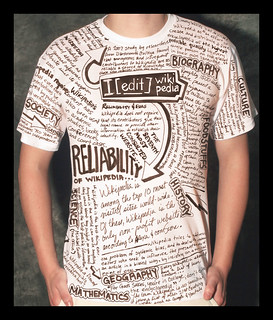
What do your clothes say about you?
Helpful Books for Writers
Being a passionate reader as well as a writer, I have inhaled a large number of books about writing over the last (cough) years.

Here are ten I have found particularly helpful – though it’s worth remembering that your process may be different and therefore Your Mileage May Vary.
Becoming a Writer by Dorothea Brande
This book isn’t about writing per se; it’s about being a writer, a person who writes – and how to not be a person who wants to write but doesn’t. It’s not by any means a new book, but in my opinion it is darned good stuff. It’s encouraging, it’s practical, and it’s one of the books which frequently appear in the pile under my bedside table.
Save the Cat by Blake Snyder
Technically a screenwriting book, it is worth reading if only for the wit and enjoyment. Though fiction writing can be looser in structure than screenwriting, a lot of the lessons carry across (the Pope in the Pool is my personal favourite).

Story Engineering by Larry Brooks
If you feel you are lost in a swampy thicket of “I don’t even know where I am or what I’m doing here or what this book even is” then this is the book for you. I was first drawn to it by the structural aspects, but got a healthy dose of all the other essential elements of a successful book.
Plot versus Character by Jeff Gerke
How to plot for character-driven writers and how to character for plot-driven writers. A painless extraction. I feel it improved both my project in hand and myself as a writer in general.
Please Understand Me II – David Keirsey
A handy tool for when you’re mulling over your characters, considering each type’s values and how they function as leader, spouse, parent or child. I don’t advocate using it as a tool for creating your characters out of whole cloth, but it can help you fill out the dimmer corners.
The Irresistible Novel by Jeff Gerke
You will never come to the end of people telling you how every last detail of your writing should be done: rules, rules, rules. Jeff Gerke cuts through all that by pointing out that the only must is that you must keep your reader’s interest. And then he lays out a whole range of choices you need to make and gives you the information needed to make those decisions yourself.
Revision and Self-Editing for Publication by James Scott Bell
You get to the end of your epic first draft. You celebrate. You take some time off to let it settle, maybe work on something else for a bit. And then you come back and you look at that massive indigestible mass of paper. And what do you do then? You make yourself a cup of tea and you settle down with this book, is what.
Let’s Get Digital by David Gaughran
Basically the best book on self-publishing I’ve read to date. Currently in its third edition, but the first edition (2011) is freely available for download from his website if you want to get a feel for it (it’s under a CC-BY-NC-ND license). Mostly about ebooks (hence the title) but with a helpful section on print-on-demand as well.

How to Market a Book by Joanna Penn
What I like most about this book is that it doesn’t make you feel guilty for not being the world’s top salesperson. She lays out the many and various options for marketing your book and then lets you decide what will work best for you.
Rise of the Machines by Kristen Lamb
The how and why of blogging and other social media for authors. I haven’t necessarily implemented everything in her book, but it’s encouraging stuff and makes it all seem possible.
So there are my recommendations – what are yours?
Thirteen Lessons Learned
It’s been a long road to this point of being a published author, and I have learned a lot. Some things I have learned from others, and some things I have learned the hard way. Here are a selection, in roughly the order I learned them.
I Some writers can produce remarkable work in odd bits and bobs of time. I am not one of those writers. It takes me a good half hour to submerge. Find out how you work best and don’t listen to those who say that there is only one right way to go to work.

II Making it up as you go along is not the only way to write – nor is is necessarily the best or most authentic way to write. It certainly works better for me if I take some time to brood and hatch out a skellington ahead of time. Again, find out how you work best and don’t listen to those who say that there is only one right way to go to work.
III LyX is great. I type into a nice clear large-print text file, and when I click a button, it shows me how it will look on the page – all properly formatted like a Real Book. How much of this was set up by the Caped Gooseberry and how much comes straight out of the virtual box, I know not, but any way you slice it, I recommend LyX.
IV However good your word-processing/typesetting program is, you will still have to make a million decisions. Really. You have no idea how many decisions go into a book until you try it, and all the decisions will need to be made regardless of how little you care about them. (Rather like organizing a wedding in that respect.)

Font, margins, running heads and/or feet (with placement & content thereof), leadings, headings, et cetera ad nauseam. Don’t even get me started on the typographical complexities induced by the inclusion of another language (real or imaginary). On the plus side, all this decision-making means your book comes out looking just how you want it.
V On which point, details are not my forte, particularly typographical details. The Caped Gooseberry, on the other hand, is an excellent proof-reader. “This says leaned, but eighty pages ago you said leant – which is it to be?” (Yes, he is a man of myriad usefulnesses. No, you can’t have him. He is mine, all mine, muahahahaha.)
VI Nothing is ever simple. On average, you can expect one moderately major detour or road-bump for every decision you make. And sometimes there will be dead ends when you least expect them. The one thing which went much more smoothly than I expected turned out to lead to a brick wall.

VII Graphic designers design. Mac Operators carry out others’ designs. While a graphic designer may choose to take on mac operator work, mac operators don’t do graphic design work.
VIII Some ebook distributors won’t accept Creative Commons-licensed works, citing the vendors’ non-acceptance of Creative Commons & Public Domain works. However, a quick search of Amazon.com (the biggest fish in the pond), reveals that not only do they still list public domain works by Austen, Brontës, Dickens etc, but that they also list Creative Commons-licensed books by Cory Doctorow and Lawrence Lessig.
IX Other ebook distributors insist on putting on DRM, regardless of the author/publisher’s wishes. (Some of them also insist on taking a large part of the profits, despite incurring almost no cost whatsoever.)
X The wholesale discount includes 15% for the distributor, so a wholesale discount of 55% means 40% of the list price for the bookseller (generally the minimum brick-and-mortar booksellers will accept in order to stock a book). This leaves 45% for the publisher (in the case of self-published books, also the author) from which the printing and shipping costs are deducted.

Depending on the cost of printing and the list price, there may be very little left – and that’s before you take into account that the bookseller will expect to be refunded for any copies they don’t sell (and will either destroy them or charge you for shipping them back).
XI When the National Library of New Zealand CiP form says “What is the book about? (Describe the main topics, themes, and/or places covered. Please be as specific as possible.)” what it means is “please provide a brief description to be published verbatim.” (Embarrassing.)
XII You can’t use a Young Adult Fiction BISAC code unless the book is primarily classified as Young Adult Fiction – which ensures it will be shelved in places where adults fear to tread. Young adult readers, on the other hand, are not afraid of venturing into the adult section. (Yay for young readers!)
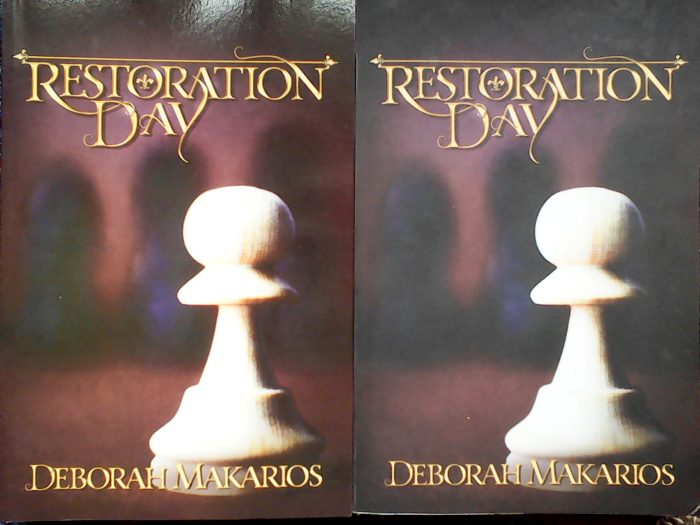
XIII A matte finish dims the colours of a cover more than you might expect. On the other hand, they feel lovely. Choose wisely.
Yes, some of these are definitely more serious than others (VI and X are pretty major), but if anything I’ve written here lets another writer learn something the easy way, I shall be delighted.
And if there are any other self-publishing Creative-Commons-using New Zealand-based writers out there, whether further along the road than me or not – drop me a line. I’d love to know that it’s Not Just Me.