A Holiday Assortment

being a selection of crafts, games, incident and etymology which have enlivened the holiday season for me and may well perform the same service for you.

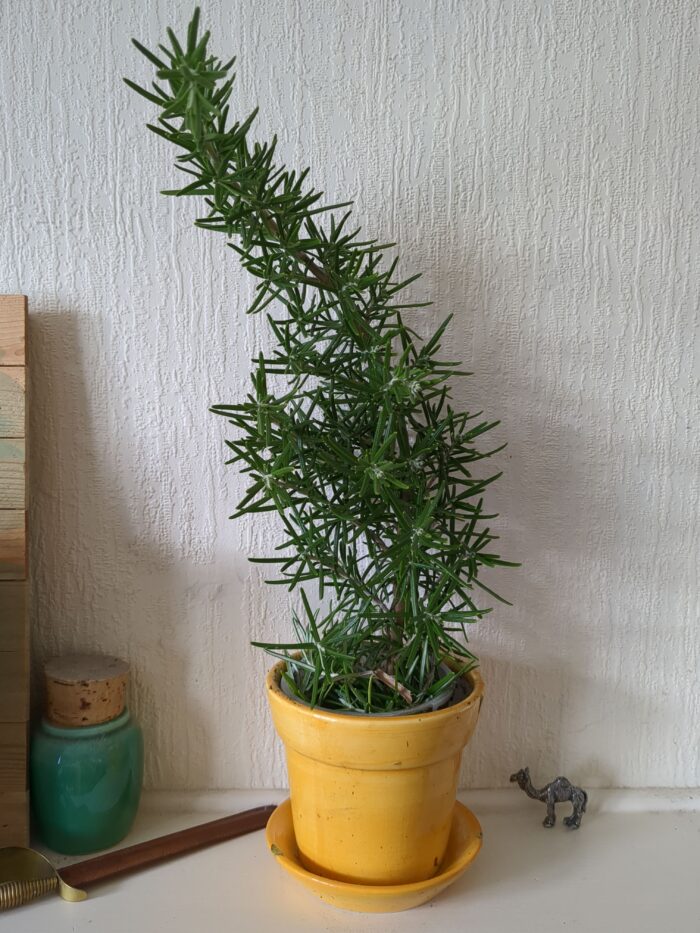
We don’t usually have a Christmas tree in this household. I don’t like plastic and I don’t much like felling trees either. We did try a living tree in a pot, but keeping it alive proved more than we were capable of. Thus the usual absence of tree. This year, however, as I was hanging out the washing on Christmas Eve, I accidentally broke a branch off the rosemary which grows beneath the washing line. So this year, we had a tree, albeit not a very large one.

A spiky green branch of rosemary in bud rises from a yellow plant pot on a white shelf. Around it are a small corked ceramic jar, a sheathed paperknife, and a small metal model of a camel.

It did manage to bloom at one point – you can see the buds in the photo above if you look carefully – but alas, it didn’t put down roots in the soil provided, and it did not long survive the Twelve Days of Christmas.

Continue & Comment

Strange and Heroic Police Deaths

The New Zealand Police website, I recently discovered, has a couple of pages dedicated to the memory of police staff who have died in the line of duty – either as a result of a criminal act, or as a direct result of duty. And there are contained in these two pages stories both poignant and strange.

Drowning

Drowning was a common cause of death for coppers, particularly in the early years, including a number who died in various bodies of water over the years “while on police business” – unspecified.

The first New Zealand police officer to die in the line of duty was Senior Constable Henry Porter, who “died while doing night rounds” in Port Chalmers near Dunedin in the winter of 1887. He was checking that a hulk in the port wasn’t being targeted by arsonists again, and due to a lack of site safety, he accidentally fell in and drowned.

View of old Port Chalmers looking from the hill above the harbour, looking down towards the wharves, 1870s

Ten years later, Sergeant Florence O’Donovan and Constable Alfred Stephenson drowned while rescuing people during floods in Napier. (It is worth noting that Florence O’Donovan was a man, with a great big bushy beard to avoid any confusion. The first woman to become a sergeant in the NZ Police was Betty Bennett in 1961 – later Inspector Bennett.)

Continue & Comment

In Praise of Old Technology: The Terraced House

Terraced houses – also known as row houses and even townhouses – are an older technology than you might imagine. What, after all, is a longhouse but a row of terraced housing without the firewalls separating each part?

A Vietnamese long-house on short stilts. One end with a deck and door is visible, and one side with three open windows with shutters.

The firewalls are, however, an important development. They remove one of the main disadvantages to the longhouse: the possibility that someone will – accidentally or otherwise – burn down the whole neighbourhood in one go.

(Where I grew up, it was not unknown for people to burn their own house down as a way to make someone else feel bad about What They Did, and this is a large part of why they don’t live in longhouses any more. Hard to tell if burning your house down is passive-aggressive or just plain aggressive, when it’s also everybody else’s house.)

Terraced houses, you may recall, were in the news not so long ago. Kirstie Allsopp, co-presenter of Location, Location, Location, was being condemned for opposing detached housing, despite living in a “nice detached Devon property” (to which she responded, “Most Jacobean mansions are detached, you morons. In London I live in a block of flats”).

On closer inspection, it is only the building of detached housing where terraced housing would be more suitable that has attracted her ire. As she points out, “It’s not the fact that they are detached; it’s the quality of them. Better to build semis or terraced houses with bigger gardens, better heat & sound insulation and, vitally, more space inside, than pretend those tiny little gaps means they are “detached” and somehow better.”

Continue & Comment