Conifers, Yogh, and the Overachieving Family of Christian IX

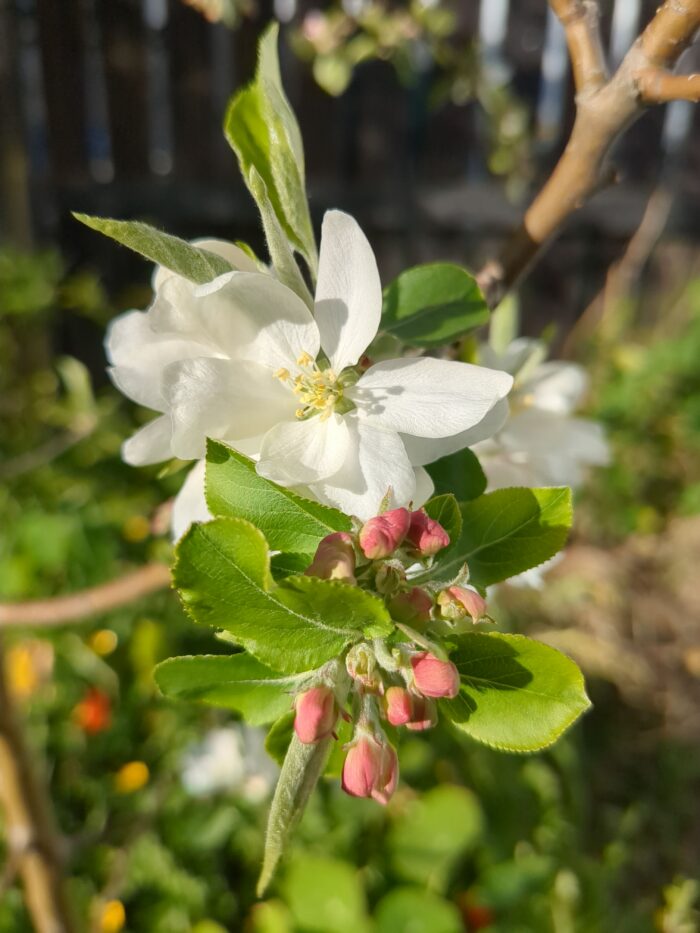
Crabapple blossoms spread their five white petals widely to the sun. Below them, fresh green leaves surround clusters of pink buds.

Now that the kōwhai has done its dash, the nearby crabapple has taken on the mantle of Plant Disappearing Under Its Own Flowers. I could claim that this was a cleverly planned succession arrangement, but for one thing, it wouldn’t be honest; and for another, who can really organize a succession of blooming in these days of climatic uncertainty? This same crabapple also bloomed while ripening its fruit last autumn. The one surviving apple from the autumn bloom is now looking rather shrivelled and sad, after having the tree to itself all winter.

Interesting Times

You may have met some overachieving families in your time, but it’s hard to beat the family of King Christian IX of Denmark. Taking his six children in order:

Continue & Comment

Woodlice, Slighting, and the Bore of Evil

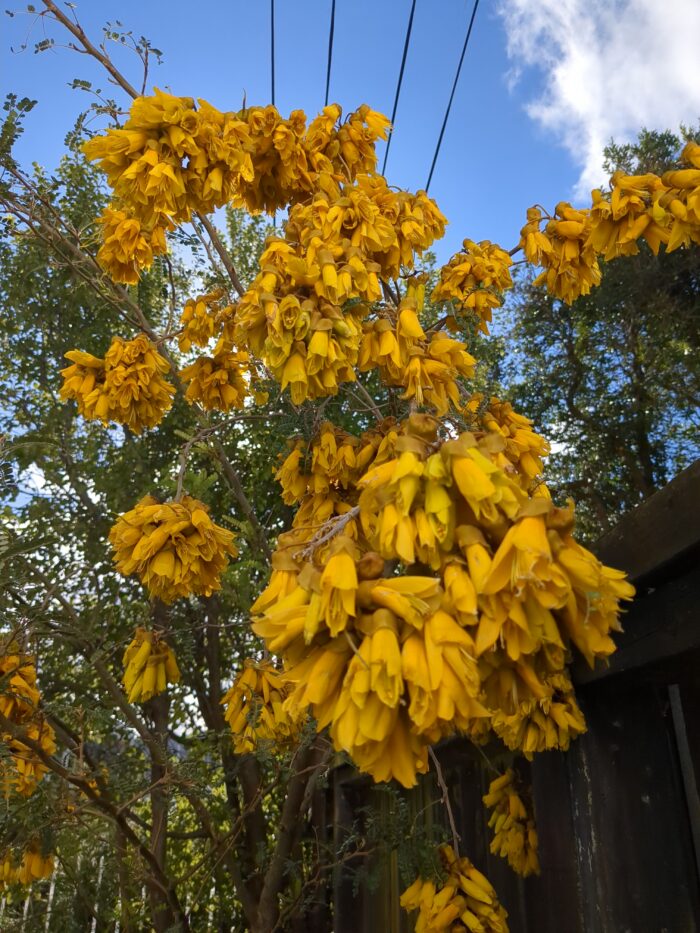
A cascade of bright yellow cylindrical flowers on a kōwhai tree, seen from below against green foliage and a blue sky.

This is our kōwhai in what I’m fairly sure is only its second year in bloom. As you can see, this lovely legume pushed the boat out – so much so, in fact, that we had frequent visits from tūī, which was delightful.

Interesting Times

Slighting a castle sounds like peering over your glasses at it and saying “well I don’t think much of that”. The actual process of slighting a castle, however, is much more…vigorous. To translate it into Kiwi English, it is the munting of the castle. To translate it into more cosmopolitan English, it is the partial destruction of the castle to a) make it unusable for castley purposes, and b) make it plain that whoever’s castle this was, they lost.

Continue & Comment

Circus, Leeches, and the Legal Fiction of the 2nd Baron Stamp

Hello again! As my recovery progresses, I am dipping a toe back into the waters of blogging. Or perhaps that should be dipping seven tiny toes, as I present you with a bit of this and a bit of that, culled from what I have been reading and doing of late.

A decorative mosaic cross hangs on a textured off-white wall above a white mantleshelf over terracotta tiling. On the shelf is a large brown glass jar with a flower arrangement. Long branchy arms swoop out to left and right, with spires of lavender and rosemary rising in the centre.

Speaking of culling, here’s something you can do with your prunings (beside compost them, chip them into mulch, or pile them up for critter habitat). The bulk of the above arrangement is from a branch of maukoro I recently had to remove. Its Latin name is Carmichaelia odorata – though I haven’t noticed any odours yet – and its English name is New Zealand broom, though it’s no relation to the European broom. Rosemary and lavender prunings add a bit of colour, foliage variety, and vertical interest.

Interesting Times

When one hears of legal fiction, one tends to think of John Grisham – but it turns out that the legal system is also capable of producing fictions, albeit not quite so gripping and bestsellery. For example, in English law, if two people in a family die and you can’t tell who died first, the legal fiction holds that the older died first, thus clarifying lines of inheritance.

This legal fiction is the cause of the record for shortest peerage: Wilfred Stamp, the 2nd Baron Stamp, died in the Blitz alongside his father, the 1st Baron Stamp. Since his father was, obviously, the elder, he was deemed to have died before Wilfred, and thus Wilfred technically became the 2nd Baron Stamp. However, as Wilfred had three daughters but no sons, the barony passed to his younger brother Trevor, who would have inherited it even if Wilfred had died first. The only differences were that Trevor became the 3rd Baron Stamp, not the 2nd, and had to pay two lots of death duties.

Continue & Comment