Seeking my Signature…

Some women devote time and effort to finding their signature lipstick. Or a signature style of bag, or sunglasses, or… Something that they use regularly, that becomes associated with them, that in some symbolic way says something about them.

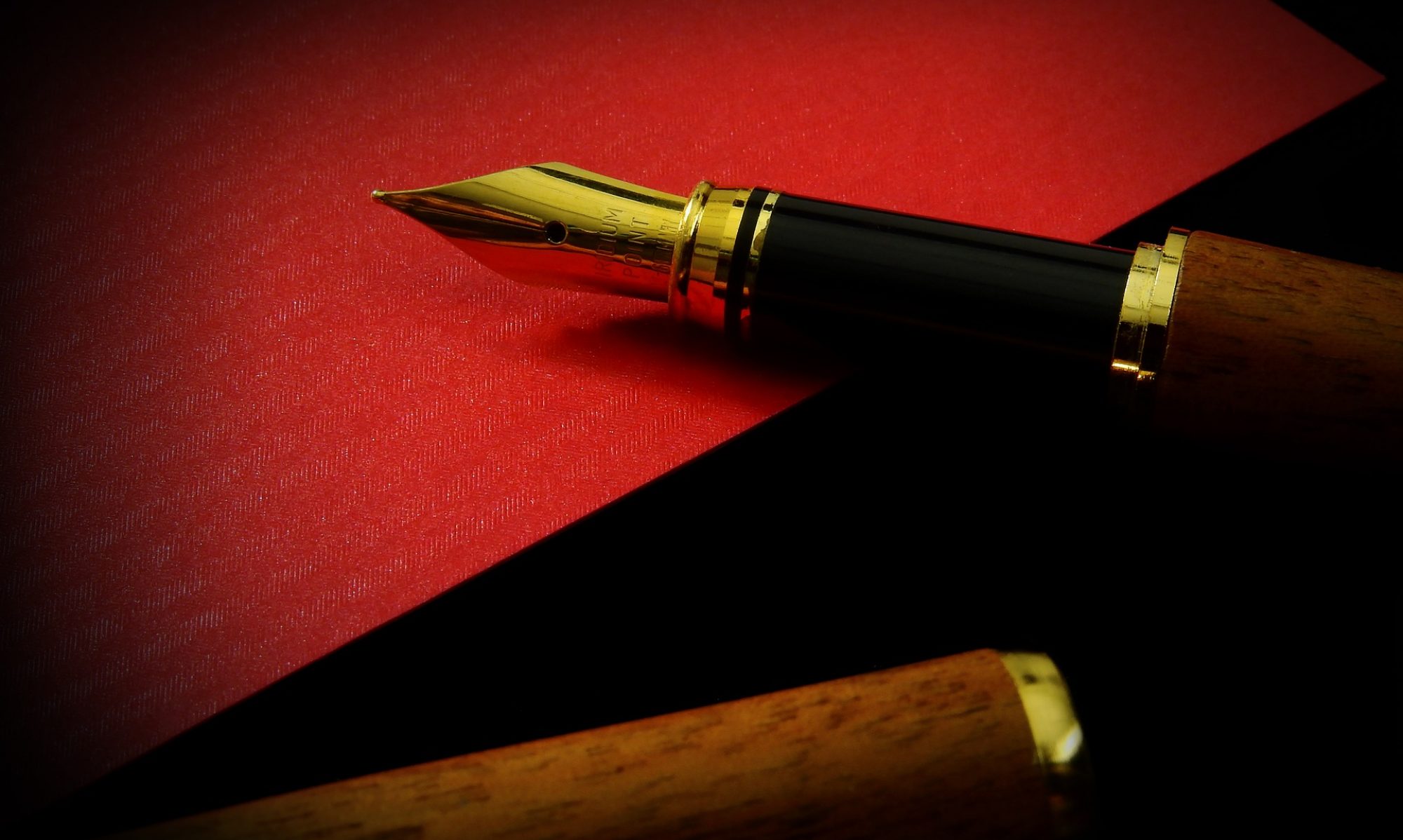
Being a writer, and an eccentric long-hand fountain-pen writer at that, I was looking for something a little different: a signature ink. Which could actually be used for a signature. OK, you could probably use a lipstick for a signature, but it would be very messy and probably not very good for the lipstick either.

Quiney Flourish

It was not the simplest of tasks. For a start, there are a huge number of fountain pen inks out there, even in this electronic age, and they all have their positives and negatives, their proponents and their critics. At least I had some criteria to narrow down the options, not least availability and cost.

Since my pen has a transparent barrel, I wanted an ink that would look good sloshing around, something with a bit of life to it. But I also wanted something that would look good on the page: not too light to read easily or too colourful to be of general use.

Neetirajsinh Signature 400x400

In the end, I settled on Waterman’s Havana Brown. Or at least, it used to be Havana Brown, and most people still call it that, since it’s a nicer and more evocative name than simply Absolute Brown, which is what Waterman have renamed it.

As far as I can tell, the only reason to rename it was that Havana Brown is also a kind of cat, and frankly, that might even work in its favour.
Better to associate with a cat than Fidel Castro’s beard, yes? Particularly given the CIA’s attempt to eliminate said beard with extreme prejudice. (I kid you not.)

Havana Brown - brown whiskers

However. Back to the ink. If you want a complex analysis of Waterman’s Havana Brown – or in fact almost any ink known to mankind – head to the Fountain Pen Network, universal trove of pen and ink related knowledge.

For myself, taking the less analytical approach, I think it’s a nice rich brown, with a hint of red to it. It’s dark enough for a good clear read, without being so dark as to look like a sub-standard black. At times it’s even slightly reminiscent of some of da Vinci’s drawings – in colour, not line, obviously, as I can’t even draw a convincing stick-man.

Take it all in all, I’m pleased with my choice, which is just as well. By my calculations, there are about half a million words in this bottle, just waiting to come out.

TWSBI Diamond 50P Ink Bottle

In Praise of Old Technologies

A bit of a oxymoron, I know, but in these days of planned obsolescence, last year’s technology can be dismissed as ‘old’.

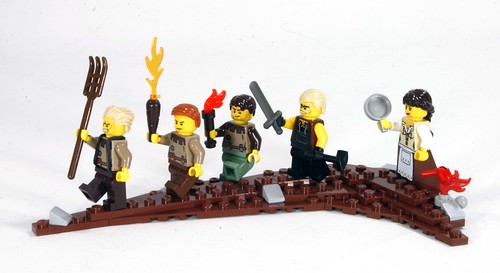
Now, I’m no pitchfork-wielding Luddite demanding a return to the good old days before the Industrial Revolution. It would make it harder to have a blog, for a start. But I do think there is a case to be made for some of the old technologies.

Angry peasant mob

Take my sewing machine, for example. (Please don’t – I’m using it.) It was made soon after World War II by Japanese craftsmen, in an early example of the time-honoured principle of using someone else’s idea and selling more of it (the idea in this case being Mr Singer‘s).

It is largely composed of cast iron and weighs about as much as a moderately-sized child. I wouldn’t call it indestructible, but if I dropped it on the floor I’d be more worried about the floor than the machine.

Ceiling Hole

The best thing about it is how relationally-friendly it is. OK, the marketing guff on modern machines probably talks about how quiet they are instead (it’s a shorter word, to begin with), but the result is the same. And I’ll bet mine’s quieter. I can have it running at full speed (i.e. as fast as I can turn the handle) and still keep up an audible conversation. In a whisper.

Not to mention my machine is about as old as the oldest surviving member of my family, and is still in perfect working order. Look so good when you are sixty, you will not, o sewing machine of today!

iWaste

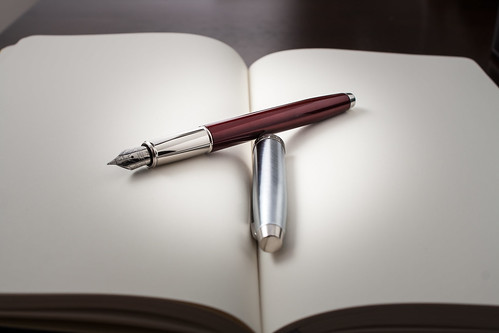
It isn’t just sewing machines. I’ve mentioned before that I write with a fountain pen (more than one, in fact). I wouldn’t give one to a five year old, perhaps, but once you’ve mastered the art of writing, using a fountain pen is not all that esoterically difficult. And it’s beautiful, fun, and better for the environment – same as the sewing machine.

And then there’s the candle-lamp with glass shade I inherited from my grandmother. No naked flames, so it’s fire-safe, but it provides enough light for me to read by. Again, there is no obsolescence, planned or otherwise. As long as they keep making machine needles, candles and ink, I’m set.

Reading By Lamplight

Of course, there are those who are all for the new and shiny and can’t imagine why someone would see value in the pre-penicillin era. Well, we’re rapidly approaching a post-penicillin era, so at least I’ll fit in.
And when the fossil fuels run out (or the price is more than most can afford), will my life be obsolete? No. I’ll be sewing, writing or reading, by the light of my candle-lamp – just as I do now.

What’s your favourite ‘old technology’ – or would you like to make a case for the new? If you’d like to make the argument for no technology at all, get off the internet, you hypocrite! That aside, all comments welcomed – have your say.

Goals and Incentives

Strange how memories forgotten for years can suddenly return with such intensity. This week I have been remembering a newspaper cutting I had on my wall as a girl, which was on the subject of setting and achieving goals.

I remember the paragraph which said to list What’s In It For Me – taking the pragmatic if somewhat un-altruistic view that you couldn’t set goals which only benefited others.
I remember the remarkably bad posture [straightens back] of the young people in the illustrations, who appeared to have been genetically modified with turtle DNA (and not the ninja sort, either).

But before either of these I remembered the feeling of order, perhaps even control, which the cutting gave me. I could set goals, break them down into steps, and then achieve them, at least in theory. I could accomplish things.

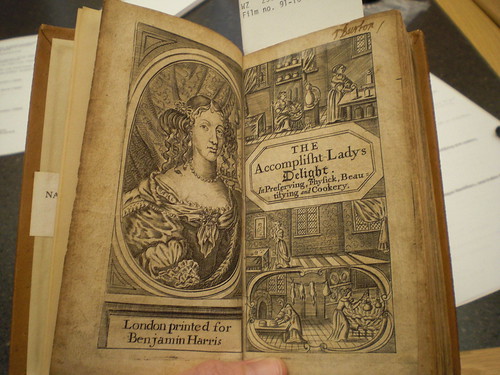
The accomplished lady's delight

For some reason (early exposure to the classics?) I always wanted to be accomplished. To my chagrin, I live in a modern society which does not really go in for accomplishments, and therefore gives me nothing to measure myself against (rather like modern manners).

There is of course always Miss Bingley’s definition: “no one can be really esteemed accomplished, who does not greatly surpass what is usually met with. A woman must have a thorough knowledge of music, singing, drawing, dancing, and the modern languages, to deserve the word; and besides all this, she must possess a certain something in her air and manner of walking, the tone of her voice, her address and expressions, or the word will be but half deserved.”

1819-evening-dress-Ackermanns

I have a smattering of modern languages, and my posture is at least better than the teenage turtle-mutants in the clipping. Let us draw the curtain of charity over my abilities as to the rest. I might do slightly better in Mr Darcy’s estimation (“to all this she must yet add something more substantial, in the improvement of her mind by extensive reading”) were it not that he expected all the rest as well. An accomplished lady of the Regency, then, I shall clearly never be.

Well, never mind. Mr Darcy isn’t a patch on the Caped Gooseberry anyway.

The resurfaced memories did make me think again about motivation and goals. While working toward a larger goal, it can sometimes be necessary to motivate oneself in the short term. Never mind what’s in it for me next year, I want to sleep now!

Carrot on a stick

Sometimes it pays to use the carrot instead of the stick, to provide yourself with a few extra incentives. For example, if I manage to write 4,000 words tomorrow, I can go and buy a new exercise book.

To be fair, I’m making a virtue of necessity in this case, as if I write 4,000 words there won’t be room in my current book for another Monday’s worth of words. But buying a new one will be enjoyable just the same.

When I finally finish the first draft of my WIP, I might buy myself one of these to celebrate.
Do you detect a certain stationery orientation in my incentives?

Pen and Paper

I admit it – I love stationery. As a child of six, I kept an envelope full of blank strips of paper in my room. They weren’t even cut straight, but there was something indefinably pleasing about them. I used to take them out and fan them through my fingers. (Weird kid? Yes. Point?)

Pens, paper, ink – I love them. And if that love can spur me on to keep writing when The End seems unimaginably far away, then even better.

What are your goals? And what are your favourite incentives? All correspondence welcomed.