Here it is: the last Gargoyle Chip Report of winter (or summer, depending on your hemisphere). How has it been going?
I have made very little progress on the gargoyles this week, mostly due to the imminent arrival of spring, and the necessity of getting large quantities of pruning done before it gets here. (I have spent three of the last four afternoons up trees.)
Mending Sheets: fabric for patches chosen and added to the relevant project container
Curtains: relevant section of book bookmarked (scraping the bottom of the barrel, I know)
Rose Quilt: no progress
I feel rather sorry for those who had to live under the French Revolutionary Calendar. Imagine making it through the months of Mist and Frost, only to have Snowy, Rainy and Windy to look forward to! Not to mention the rather unpleasant idea of having to work nine days before you get a single day off.
So when it came to the world-building task of creating a calendar for Restoration Day, I knew some things I wanted to do, and some things I wanted to avoid. Like the Jacobins, I created a round of months which reflected the natural world. Unlike the Jacobins, I had more sense than to try to introduce decimal weeks.
The Arcelian calendar begins with spring: Grenian (greening), Blosse (blossom) and Molsh – time to fork some mulch onto the garden before the summer heat comes and dries everything out. Summer starts, you see, with Sunnen and ends with Dryden, with Hayen in the middle. Autumn brings Hærfest (time for a party!) followed by Sere (as everything withers) and Misth (you can tell winter is around the corner, can’t you?).
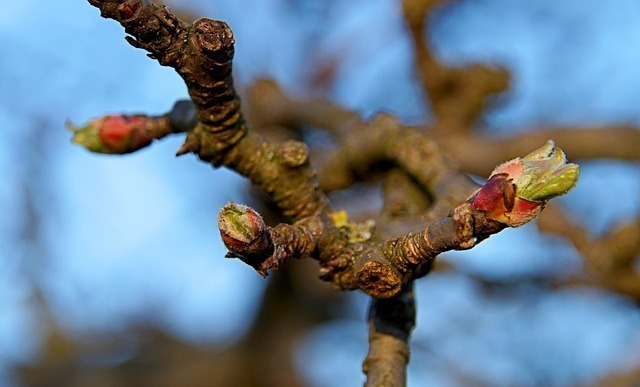
Unlike the Jacobin calendar, the winter months focus less on the doings of the dismal weather, and more on the doings of the people. The first month of winter is Prunen, followed by Diggen, which brings us at last to Budd, holding out the promise of the green of spring returning at last.
I had considered relating these months to the months of the Gregorian calendar, but then it occurred to me that my readers span both hemispheres and Confusion Is Liable To Result.
In the northern continents, for example, it is now Hayen, a time of hotness and dry grass. Down here in New Zealand, hotness is exactly what it isn’t, and as for dry grass, the last time I saw the cat bound across the back yard, it was like watching a skipping stone – splash, splash, splash.
No, down here it is Diggen time, although due to being rather behindhand with the gardening (I don’t like to go out when it’s raining, which is often), we are still at work on the pruning. Not the getting-rid-of-unnecessary-stuff-around-the-house kind of pruning, the actual pruning kind of pruning, with chopping off of branches and the like.
This year’s big effort is on the grapevine, a lordly, shed-eating monster which I suspect had not been pruned in years if not decades. To give you an idea of its size: the Google Earth image of our property does not give any indication that that shed exists. As far as the satellites are concerned, there is nothing but grapevine.
It not only covered the roof of the woodshed, it hung down on all four sides. Obviously, time for a haircut, preferably one that left the grapevine fruiting in places we could reach. Enter the ladder, the loppers and the secateurs. Also, to my surprise, the bucket and trowel.
Things which I did not expect to find in the grapevine:
> loop-de-loops and pretzels of blackened branches which had not seen the sun in years
> a thick layer of loam (the remains of years or decades of rotted-down leaves and grapes)
> earthworms (some white and squirming in the unaccustomed light)
> root systems (yes, some of the branches were putting down roots into the compost. I didn’t even know grapes could do that.)
> snails and slugs (some quite enormous)
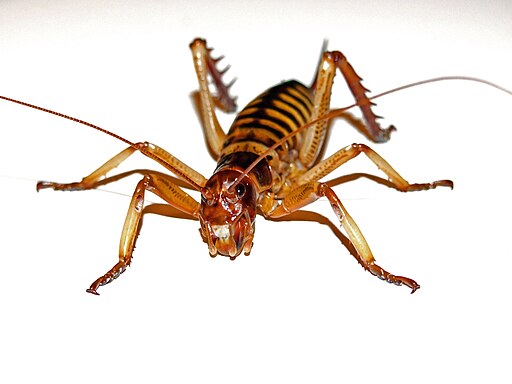
> wetas (several)
Surprise!
> literally hundreds of slaters/woodlice and Things With Legs (did you know that slaters aka woodlice are crustaceans? Like lobsters. It does not make me loathe them any less.)
> and a large spider (only one, mercifully. Possibly a black tunnel-web spider, but I think I shall call it a cabochon spider, for its thorax and abdomen were round and smooth and tastefully coloured, at least until I beat it to a pulp with the trowel. After that, not so much.)
After digging up all that, I wouldn’t have been that surprised if I found a lost civilization or the portal to another world in there.
As you can imagine, this was no mere light afternoon’s gardening. I was three afternoons in before the difference was even discernible. But I persevered for two more solid afternoons, and, like Gandalf before me, “Ever he clutched me, and ever I hewed him… I threw down my enemy, and he fell from the high place and broke the mountain-side where he smote it in his ruin.”
Half the yard is now covered in the monster’s remains (unlike the mountain-side, our land is too squishy to break), and on the other half, two hills of grape-compost stand, ferried there in buckets by my Dearly Beloved.
Job done. At least until my aches fade sufficiently for me to tackle the apple, the redcurrant, the lemon and the Japanese maple. But we shall never see such a Prunen again.
Or, as it is known in knitting parlance, decreasing.
There are several different decreases available to the knitter, and each one gives us a different idea for how to downsize and declutter.
K2tog (knit two together)
A simple decrease: if you have two the same, get rid of one. Or as John the Baptist put it, whoever has two coats should give one to someone who has none (Luke 3:11). Martin of Tours went one better and divided by two despite starting with only one.
This decrease also works if you have two things that, while different, can serve the same function. Chuck out your garlic crusher; keep a knife.
P2tog (purl two together)
This decrease works very much like the K2tog; except that you approach the stuff from a different angle. Change your perspective (whether physically or mentally) and see what looks unnecessary from there.
K3tog (or P3tog)
This decrease is also on the same principle as the K2tog, except you start with triplicates instead of duplicates. It can also be extended to quadruplicates or quintuplicates if you really have far too many of something.
Sl1, K1, psso (slip one, knit one, pass slipped stitch over)
This is a good decrease for those who enjoy rearranging their furniture: move things around and you will see your excess more clearly.
Why do I need more x than will fit in that shelf? Why have I kept that pile of y all these years? If I got rid of the z, then I could have my abc here to hand…
Sl1, K2tog, psso (slip one, knit two together, pass slipped stitch over)
This is a decrease that looks very complex and impressive, but is really just a combination of two of the preceding methods. Take it step by step and you will find you have made twice the reduction.
P2tog tbl (purl two together through back loops)
This is the decrease that looks impossible at first glance. I mean, how could I… I’d have to…. No, I don’t think I can. But give it a go (watch your tension), don’t give up, and you’ll be surprised at what you actually can do.
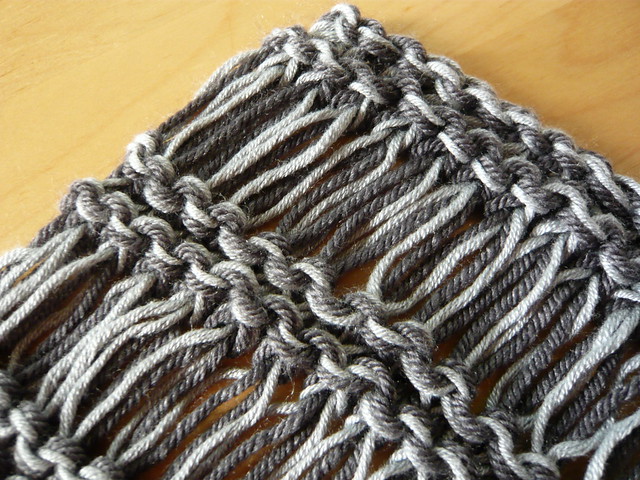
Drop stitch
This is an extreme form of decrease, to be sure. It will leave a hole, and may have spreading consequences… …and yet for all that, it may produce a more beautiful result. Always providing, of course, that it is done intentionally.
What decreases do you use? Have I missed some? Please share in the comments!

 Here it is: the last Gargoyle Chip Report of winter (or summer, depending on your hemisphere). How has it been going?