On Swearing

Swearing is complicated, even when it’s simple. Start with the fact that people use the word swearing to mean two completely different things. There’s the swearing one does when one takes an oath – swearing in a Member of Parliament, or a jury, or a President – and the swearing one does for rather less official reasons. Same word. Confusing.

NIXONinaugurationday
Quaker: thou art doing it wrong

For extra confusion, the tradition of swearing on a Bible – frequently required for legal purposes in various countries with a Christianized past – is actually forbidden in the Bible itself, in two places (Matthew 5: 33-37 and James 5:12).

The idea behind swearing on scriptures is that the swearer will not lie in case their god gets them for tarnishing his, her or its reputation. It’s hard to see how this is supposed to work with Christians, since the swearing itself would be disobedient regardless of whether one subsequently told the truth or not. Say yes when you mean yes and no when you mean no – it’s much simpler.

Swear Bear

The other kind of swearing seems less complicated. Until you realize there are all these unspoken rules about swearing – who, when, where, what… The Romans had a very codified structure of who could say what, in the presence of whom. There were some swear-words women could use; some they couldn’t use – but men could use in their presence; and some that women weren’t even supposed to know about, because only men used them, only in male company. Allegedly.

English swear-words are mostly the Early English words for various bodily functions (which makes it rather unfair to follow them up with “excuse my French”). Those that aren’t earthy are mostly blasphemous, and for some reason swearing has not caught up with religious pluralism. Or atheism.

Civilian Conservation Corps - NARA - 195836As Terry Pratchett wrote, “It takes a very special and strong-minded kind of atheist to jump up and down with their hand clasped under their other armpit and shout, ‘Oh, random-fluctuations-in-the-space-time-continuum!’ or ‘Aaargh, primitive-and-outmoded-concept on a crutch!’.”

While English has a small enough pool of Really Rude Words that they can be identified simply by their initial letters, it has a wealth of minced oaths; what Bill Bryson calls “euphemistic expletives – darn, durn, goldurn, goshdad, goshdang, goshawful, blast, consarn, confound, by Jove, by jingo, great guns, by the great horn spoon… jo-fired, jumping Jehoshaphat, and others almost without number.”

Mara-Young-Men-Jumping-2012
Jehoshaphat jumping

I have an aunt who says “Flaming Norah” when the occasion seems to require it (though Norah has yet to catch fire); and I myself say “blast,” “dangnabit,” and other such phrases. One of my favourites comes from A Pattern of Islands by Arthur Grimble, in which an old woman lambasts her grandson as a nikiranibobo for seeking offshore employment. “‘I dare not translate this word, sir,’ stammered the interpreter when he recovered himself; ‘it is a very old and clever word, but it is not official.'”

At the risk of sounding prim, let me say that I don’t use blasphemy: it’s either disrespectful and offensive to Someone I love dearly, or (if one embraces pluralism) offensive to people who hold other beliefs. I don’t use language of the fouler sort either. After all, if I wouldn’t want to step in it, I definitely don’t want it in my mouth.

The Waiting List

I have never been honest with myself about my stack of books waiting to be read. In fact, I have been so far from honest about it that there isn’t even a stack. Not because I have it all in the form of e-books (I am a paper-lover, myself) but because I have cunningly hidden them all on the bookshelves among the books I have read.

I had a look this afternoon and was horrified to find that I own seventy-four unread books. Seventy-four. Take a minute to let that sink in. If I read one every week, that would last me til April 2017. If I did come clean and make an actual stack out of them, it’d probably be taller than me.

Stack of books in Babelplatz

That isn’t counting reference books or the Stephanie Pearl-McPhee one I bought today. Or most of the Caped Gooseberry’s books, because I don’t plan on reading most of them (e.g. An Introduction to Abstract Algebra, Vol. I). Just to look a little legit, however, I did count the books I have started, but not yet finished.

Shall we look at the breakdown?

Non-fiction was far and away the largest section, with a whopping 44 books awaiting my attention, on subjects ranging from bookbinding to religious drama to the history of Europe to a book simply titled On Killing. (Not, you will be happy to learn, a DIY book.)

Fiction I broke down into Classics, General and Sci-Fi/Fantasy, since that’s how I shelve them. I have seven unread classics (including War and Peace, naturally) and seven unread members of the general fiction class.

Vintage books by naturesdoorways
In case you were wondering, my test for what constitutes a classic is whether they bother to give you a nice binding. Bog standard binding? Not a classic.

There were only five unread sci-fi/fantasy novels, mostly due to buying a series which I am working through slowly.
I also have eight unread children’s books – those are the ones I intend to read myself, rather than keep for the convenience of visiting children – and a paltry three books of unread poetry or plays.

The question that then arose – “then” being after I’d recovered from the shock – was why all these books were unread. The reasons, of course, differed. Some I haven’t had for very long, like the Moomin book; others are just hard to get through. Like War and Peace. Others I feel I really ought to read, but never having had the mental energy and the interest at the same time, it hasn’t happened yet. I suspect my re-reading habits have a lot to do with this.

Mind you, with a lot of these books my intent is to read them once, and then pass them along.

pruning shears and gloves

So far, so slow. I managed to purge one fairly decent-sized book this month, as well as a tea-infuser in the shape of a duck (I love it, but it seemed selfish to keep it when I never used it) and a set of bracelets I found still bagged and tagged under a tree in our garden (a complete mystery).

How is simplicity looking in your neck of the woods?
Who Wears the Fur in this House?

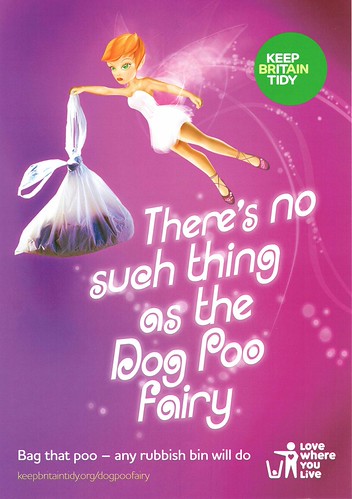
Cats pretend to be high-maintenance overlords; dogs pretend to be slavishly devoted minions. Some people fall for this, but do not be deceived! The true state of affairs is revealed by one simple word: poo.

dog poo fairy

A cat, given the requisite freedom, will do (and bury) its poo somewhere you will never see it. A dog, on the other hand, will poo right in the middle of the lawn (and probably not even your lawn) and thus require you to pick it up. This is not the action of a devoted minion.

Aldous Huxley said that “to his dog, every man is Napoleon,” but can you really imagine Napoleon on pooper-scooper duty? Didn’t think so. On the other hand, there is an entire luxury industry based around the poo of a certain kind of cat. I am not making this up.

A dog is like a permanent toddler: they’re bumptious, they freak out if you’re not on hand, and they will always need you to feed, bathe, and clean up after them.

Australian Cattle Dog puppy mascot

Cats, on the other hand, are more like teenagers: a broad degree of independence with occasional outbreaks of frolicksome childhood (when they think you’re not looking) and, of course, they’re always ready to veg on the couch. They are also always ready to devour anything left out on the bench, but at least they don’t have opposable thumbs. The fridge and microwave are safe.

I am, it is true, a cat person. I have had cats for most of the last twenty years. On the other hand, I have also owned a dog, and I think I can say that I was not a great success as a dog owner. Dogs, like children, are high-maintenance and high-energy, which does not fit well with a low-energy person.

If you are considering parenthood, I recommend you try a dog first. The feeding, the excursions, the cleaning up messes you didn’t make, the constant behaviour-correction, the inability to go away for the weekend, the broken nights (children and dogs don’t have inhibitions about volume nor sharing their feelings with the world) – it’s all there. If you can’t hack the canine version, consider carefully before embarking on the human version.

Our dog getting treated like a baby, again.

Cats, on the other hand, only require feeding. They clean up after themselves; they don’t need to be taken for walks in the pouring rain; they don’t mind if you get someone else to feed them for a couple of days (but they’re happy to see you when you get back) and once they’ve learned what behaviour you don’t like, they’re careful not to do it when you’re looking. Cats only emit high-decibel noises in an emergency, and they prefer to spend their nights (and indeed, their days) curled up snoozing on your bed.

And despite the bad press, cats do care. I had a cat once that would climb into the lap of a crying person, rub up against them, emit concerned mews and generally be as consoling as possible. Admittedly, she couldn’t tell the difference between laughing and crying, but it’s the thought that counts.

I think I can safely say Absinthe's a lap cat now.

Cats have also been known to warn their owners of house-fires, attack intruders, or snuggle up to elderly people in rest-homes who are nearing their end. Mind you, dogs are also known to do these sorts of things – especially if they’ve been trained to.

Don’t get me wrong: I like dogs. But until they learn to clean up after themselves, it’s the human who’s the devoted attendant, not the dog.