Quality

My grandmother believed in buying quality: the best you could afford. The idea of buying an item simply for the status of the label would have been completely foreign to her. What she would have said about buying an item simply for the status of the faked label, I don’t know, but it would have been short, sharp and unflattering.

Not a woman to be trifled with (6171317215)

Buying good quality is, to my mind, very sensible, and probably the reason why a lot of what the Caped Gooseberry and I own comes from our ancestors. Not just big things like furniture, but the sorts of things which these days are subject to obsolescence and its more evil twin, planned obsolescence.

We still use my grandmother’s VCR for watching videos. We still use my grandfather’s heater. They’ve been gone for ten and twenty-one years, respectively, but they bought quality, and it shows.

I still wear their dressing-gowns, too. Admittedly, the cord on my grandpa’s wool dressing-gown needed replacing this year, but that’s not bad after more than two decades of wear.

Ladies clothing section, Bell and McCauley's Store, Drouin, Victoria (6173559063)

It’s the same on the Caped Gooseberry’s side. He regularly wears some of his grandfather’s clothes (his grandfather’s been gone more than thirty years now); and I use his granny’s teapot (made in the early ’20s) on a regular basis, pouring tea into my gran’s teacups.

We are still using my gran’s everyday crockery set – despite years of wear it was in much better condition than the set I bought new (and cheap). The same goes for her oven dishes, and my grandfather’s china jugs.

One of my favourite winter hats (très chic) originally belonged to the Caped Gooseberry’s granny. I also have one of her summer hats, which she wore to meet Prince Charles back when he still had hair. Dark hair.

I wrote the entire first draft of my WIP (158k words) with a fountain pen dredged up from somewhere in my husband’s ancestry. I still use it every day. It just keeps working.
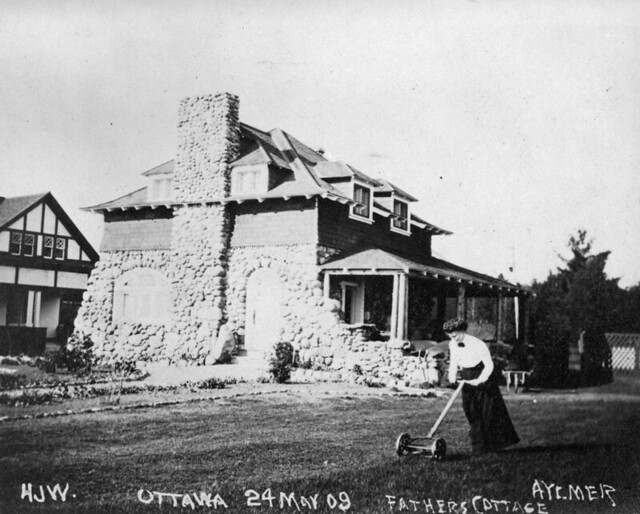
The Woodside's cottage, Aylmer, Quebec, May 24, 1909 / Le chalet des Woodside à Aylmer (Québec), le 24 mai 1909

We still use my gran’s lawnmower (with my grandpa’s WWII petrol tin). It wasn’t working so wonderfully well lately, so I took it for a shamefully overdue maintenance visit to the mower man. The blades were not only blunt but actually broken. (I shudder to think what my gran would have said.)

Mercifully, maintenance and spare parts are still available for mowers. The same cannot be said of everything. Time was, you could pop down to the local stationers to have your fountain pen nib sharpened. These days, most of them don’t even sell real fountain pens, just fountain-looking pens with disposable insides (which do not count).

I do worry about what we are going to do when these practical heirlooms eventually wear out or break down. It’s very hard to get things repaired or mended these days – you’re just expected to buy a new one. Where will we find another such heater? Where such a perfectly dripless teapot?

A Customer Can Use the Ration Books of the Whole Family. But the First Thing She Will Want to Know When She Buys Pork Chops, Pound of Butter or a Half Pound of Cheese Is - "How Many Points Will It Take?" 1941 - 1945 (4545457453)

Time was, if you were prepared to pay, good quality was available. These days it is perfectly possible to pay a high price for something which is still of inferior quality, and which will not last. Gran would not be pleased.

I’ve reached the stage in my life where I’d rather pay more for something I know will last – though as things stand in the world today, it’s not looking good for the grand-kids.

On Swearing

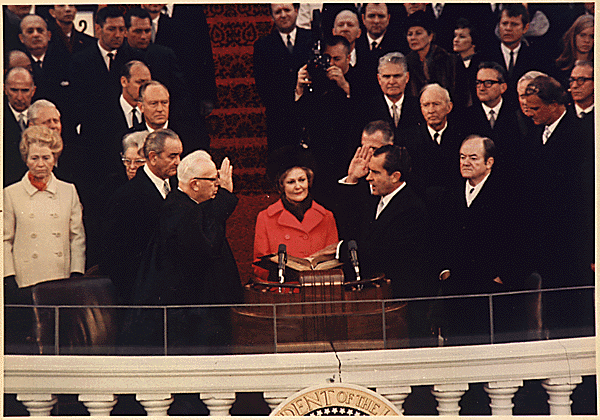
Swearing is complicated, even when it’s simple. Start with the fact that people use the word swearing to mean two completely different things. There’s the swearing one does when one takes an oath – swearing in a Member of Parliament, or a jury, or a President – and the swearing one does for rather less official reasons. Same word. Confusing.

NIXONinaugurationday
Quaker: thou art doing it wrong

For extra confusion, the tradition of swearing on a Bible – frequently required for legal purposes in various countries with a Christianized past – is actually forbidden in the Bible itself, in two places (Matthew 5: 33-37 and James 5:12).

The idea behind swearing on scriptures is that the swearer will not lie in case their god gets them for tarnishing his, her or its reputation. It’s hard to see how this is supposed to work with Christians, since the swearing itself would be disobedient regardless of whether one subsequently told the truth or not. Say yes when you mean yes and no when you mean no – it’s much simpler.

Swear Bear

The other kind of swearing seems less complicated. Until you realize there are all these unspoken rules about swearing – who, when, where, what… The Romans had a very codified structure of who could say what, in the presence of whom. There were some swear-words women could use; some they couldn’t use – but men could use in their presence; and some that women weren’t even supposed to know about, because only men used them, only in male company. Allegedly.

English swear-words are mostly the Early English words for various bodily functions (which makes it rather unfair to follow them up with “excuse my French”). Those that aren’t earthy are mostly blasphemous, and for some reason swearing has not caught up with religious pluralism. Or atheism.

Civilian Conservation Corps - NARA - 195836As Terry Pratchett wrote, “It takes a very special and strong-minded kind of atheist to jump up and down with their hand clasped under their other armpit and shout, ‘Oh, random-fluctuations-in-the-space-time-continuum!’ or ‘Aaargh, primitive-and-outmoded-concept on a crutch!’.”

While English has a small enough pool of Really Rude Words that they can be identified simply by their initial letters, it has a wealth of minced oaths; what Bill Bryson calls “euphemistic expletives – darn, durn, goldurn, goshdad, goshdang, goshawful, blast, consarn, confound, by Jove, by jingo, great guns, by the great horn spoon… jo-fired, jumping Jehoshaphat, and others almost without number.”

Mara-Young-Men-Jumping-2012
Jehoshaphat jumping

I have an aunt who says “Flaming Norah” when the occasion seems to require it (though Norah has yet to catch fire); and I myself say “blast,” “dangnabit,” and other such phrases. One of my favourites comes from A Pattern of Islands by Arthur Grimble, in which an old woman lambasts her grandson as a nikiranibobo for seeking offshore employment. “‘I dare not translate this word, sir,’ stammered the interpreter when he recovered himself; ‘it is a very old and clever word, but it is not official.'”

At the risk of sounding prim, let me say that I don’t use blasphemy: it’s either disrespectful and offensive to Someone I love dearly, or (if one embraces pluralism) offensive to people who hold other beliefs. I don’t use language of the fouler sort either. After all, if I wouldn’t want to step in it, I definitely don’t want it in my mouth.

The Waiting List

I have never been honest with myself about my stack of books waiting to be read. In fact, I have been so far from honest about it that there isn’t even a stack. Not because I have it all in the form of e-books (I am a paper-lover, myself) but because I have cunningly hidden them all on the bookshelves among the books I have read.

I had a look this afternoon and was horrified to find that I own seventy-four unread books. Seventy-four. Take a minute to let that sink in. If I read one every week, that would last me til April 2017. If I did come clean and make an actual stack out of them, it’d probably be taller than me.

Stack of books in Babelplatz

That isn’t counting reference books or the Stephanie Pearl-McPhee one I bought today. Or most of the Caped Gooseberry’s books, because I don’t plan on reading most of them (e.g. An Introduction to Abstract Algebra, Vol. I). Just to look a little legit, however, I did count the books I have started, but not yet finished.

Shall we look at the breakdown?

Non-fiction was far and away the largest section, with a whopping 44 books awaiting my attention, on subjects ranging from bookbinding to religious drama to the history of Europe to a book simply titled On Killing. (Not, you will be happy to learn, a DIY book.)

Fiction I broke down into Classics, General and Sci-Fi/Fantasy, since that’s how I shelve them. I have seven unread classics (including War and Peace, naturally) and seven unread members of the general fiction class.

Vintage books by naturesdoorways
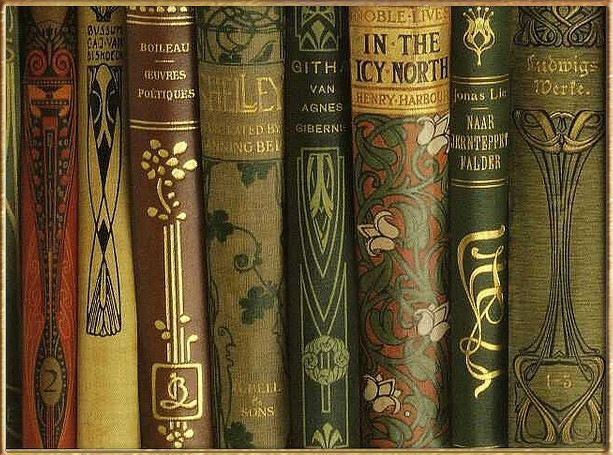
In case you were wondering, my test for what constitutes a classic is whether they bother to give you a nice binding. Bog standard binding? Not a classic.

There were only five unread sci-fi/fantasy novels, mostly due to buying a series which I am working through slowly.
I also have eight unread children’s books – those are the ones I intend to read myself, rather than keep for the convenience of visiting children – and a paltry three books of unread poetry or plays.

The question that then arose – “then” being after I’d recovered from the shock – was why all these books were unread. The reasons, of course, differed. Some I haven’t had for very long, like the Moomin book; others are just hard to get through. Like War and Peace. Others I feel I really ought to read, but never having had the mental energy and the interest at the same time, it hasn’t happened yet. I suspect my re-reading habits have a lot to do with this.

Mind you, with a lot of these books my intent is to read them once, and then pass them along.

pruning shears and gloves

So far, so slow. I managed to purge one fairly decent-sized book this month, as well as a tea-infuser in the shape of a duck (I love it, but it seemed selfish to keep it when I never used it) and a set of bracelets I found still bagged and tagged under a tree in our garden (a complete mystery).

How is simplicity looking in your neck of the woods?