May: A Sense of Possibility

You cannot dream too big for God, I’ve recently been told.

The fifth chapter in The Artist’s Way is all about daring to dream. And I have most certainly been struggling with this.
There are lists to complete: what would I try if I weren’t too crazy? What would I love to do but aren’t allowed? I wish…
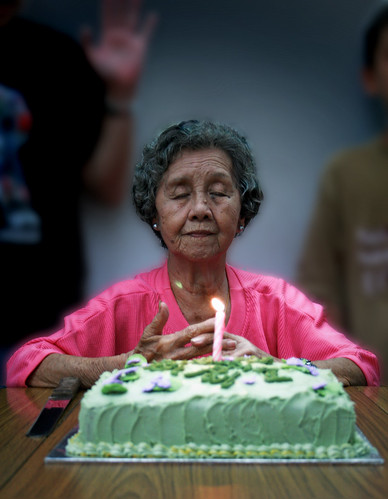
A Birthday Wish

Not surprisingly, the DDJ showed up on a lot of these lists – or rather, the absence of the DDJ, along with reading all day and eating hot Vogels toast with butter. Also a writing room in the shape of a teapot. (I may need to think this one through a little more.)

I had to list twenty wishes, and the further I got the deeper and less specific they became: to be close to God, to live meaningfully, to be loving, to be joyful, to live creatively.

I am happy to be here

And then I had to list five grievances with God. That felt against the grain, but as she says, God can take it. The DDJ cast a long shadow there, too.

Then there was a great deal of image-collecting – images of what I’d do if I were 20 and rich, 65 and rich, could live other lives. This was quite fun, as I’ve mentioned.

Library of knowledge

Julia Cameron asks some rather probing questions about self-sabotage. Too often God offers us something and we demur, thinking if it seems too good to be true, it is – or it’s a trap.

“The question is ‘Are you self-destructive?’ Not ‘Do you appear self-destructive?’ And most definitely not ‘Are you nice to other people?'” (p. 99).
This is an important distinction. Not that being a writer (or any other kind of person) is an excuse for being unkind to others, but that others are responsible for their own lives and you are responsible for yours.

Putting other people’s priorities ahead of your own may make you out a really nice person, but it also means that what is important in your own life is neglected.

Overgrown yard
There is no credit in mowing your neighbour’s lawn if your own is threatening to take over your house.

So, taking responsibility for my own life, I had to list my favourite creative block, my payoff for staying blocked, and the person I blame for being blocked. (Uncomfortable self-scrutinisation, anyone?)

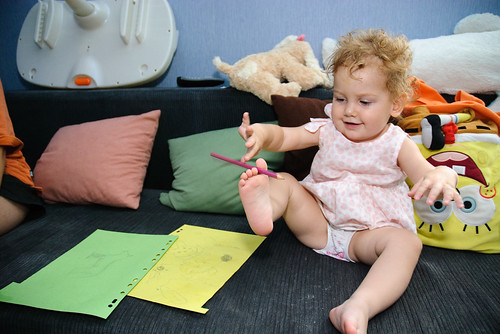
I soon decided my favourite block was tiredness. Then I had to draw a cartoon of myself “indulging in it”. Not being over-endowed with artistic ability, my cartoon was somewhat less elaborate than this:

The payoff was harder to figure out. The payoff for the DDJ is obvious – pay, leading to a roof over my head and food on the table. But what’s the payoff for being tired? Or rather, what’s the payoff for letting tiredness stop me writing?

It isn’t rest, because I find it very hard to rest when I know I should be doing something else. It might be the knowledge that I didn’t fail (because I didn’t try) but it feels like failure anyway.
Perhaps it’s avoiding poor-quality work. Or avoiding that feeling of facing the page and knowing I have nothing to give it. Perhaps it’s just the path of least resistance, inviting pity, framing myself as the victim. (Poor thing. She’s so tired.)

eh. (365.335)

I wasn’t sure who I blamed – could be anyone from me to Capitalism. I don’t know that having someone to blame helps. Well, it might make you feel better (though I doubt it) but it doesn’t help you get out. And out is exactly what I want to get.

I still don’t know what lies before me. Rationally speaking, there is no more cause for hope than there was a month ago, or a month before that. And yet, the flame of hope is kindled in me again. A tiny little wavering blob on the wick of my soul, but there it is.

286/365 - One FlameDon’t nobody breathe.

Do You Believe?

When did you start to believe in yourself as a writer?

I always knew I was good with words (ok, I can still remember asking my mother if sentences ended with a capital as well as started with them, but that was decades ago now).

Learning to Write

There were the occasional pieces in school publications, but that’s hardly conclusive evidence. You don’t necessarily have to be good to be published in a school mag, you just have to be better than the competition.

I think the first time I can remember seriously thinking of myself as a writer was a bit over twelve years ago now – it was supposed to be one of those school things where you tag along with a grown-up for a bit of work experience.

People work on computers at the Busy Internet computer center in Accra

Trouble was, we lived in the back of beyond where almost everyone was a hunter-gatherer (and distinctly averse to taking along annoying little white kids who might do something stupid like hurt themselves or scare the food away). The exceptions were my parents, and I was sufficiently formed as a person by then to know that their line of work was Not For Me.

So we had to Make Do and Make It Up.

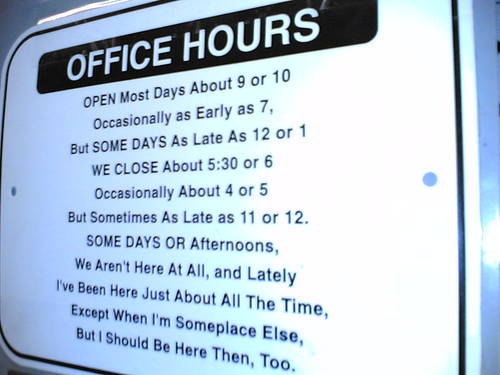
My mother asked me what I would like to do, and I said I liked “writing, but-” and she said, well then, you can write an article. I will be your manager, you will have fixed hours (bit of a foreign concept in my life at that point) and you will write an article which you will then submit, etc etc. (Or words to that effect.)

Office Hours

I sat. I wrote.
I submitted the piece to my mother for her editorial approval, and the piece was eventually published in the in-house magazine of the organisation my parents worked with. Compliments ensued (I’m fairly sure they were intended as compliments, anyway), a cutting was made, and that was that.

But the writing bug had bit.

She scanned the page...

In one fell swoop my mother had moved writing in my mind from being something enjoyable but regrettably limited (rather like time spent lying about daydreaming) to being something that happened in the real world. Being a writer went from pie in the sky to an actual possibility. Yes, there were the hours, and the editor, and the annoying people calling you cute, but there was the writing!

The Dream

It was like telling a kid they could get a job as a professional ice-cream taster. Money for jam. (Well, jam, anyway. Negligible money.)

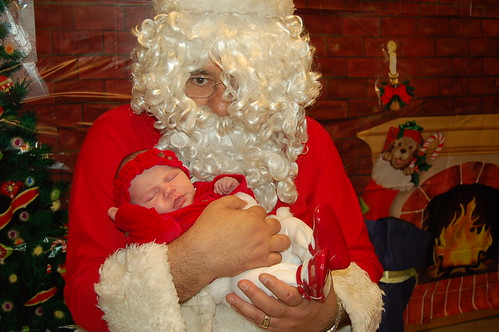
Mind you, my mother doesn’t hold with telling children pretty little lies – Santa Claus, for example. My parents never tried to tell me he was real, and this was a good thing, because living in a country with ‘security problems’ does not shape a child into the sort of person who takes ‘strange man is watching you and will creep into your bedroom while you’re asleep’ at all well.

creepy Santa

So she wasn’t going to tell me that writing jobs were easy to come by, and I did flirt with other ideas over the years – medicine, law, landscape architecture…

But I kept thinking of myself as a writer. I kept writing, here and there. I even earned a bit of money by my writing (slightly awkward when I was sent a cheque and had no bank account to deposit it into).

Throughout my life, my mother has been the one who has taught me to question my assumptions that I can’t do something, that a particular course of action is not open to me.
Often it is, but at a price I am not prepared to pay.
But sometimes it is a price I am prepared to pay, and the world opens out before me in a way I didn’t believe it could.

"Opened the door of faith..."

So if I never said it before: thank you.

Number Crunching

Sometimes progress is slow.
Sometimes it is very slow.
Sometimes it is so slow you don’t actually want to admit to yourself just how slow it is.

Imagine these:

Herd of tortoises

stampeding through this:

Peanut Butter Texture

and you get the idea.

But sooner or later you have to be brutally honest with yourself. The WIP isn’t going to write itself.
If things do write themselves at your place, you’ve got problems.

Rembrandt - Belshazzar's Feast - WGA19123

I have, over the *cough* years since I started working on Tsifira, accumulated about 18,734 words. (Including some of the excerpts I’ve removed for now, and some of the notes, but not all of them. Basically, I’m counting anything that was worth typing up.)

A novel is, of course, as long as a novel is long, but taking geographical distance as an indicator of word count (it’s a road story) I’m about a quarter to a third of the way there. Not knowing, of course, how many detours might occur.

One step after another

Say 80,000 as a guess.

In the just-over-two months since I started keeping a word count, I’ve written 1,651 words for Tsifira.*

80,000 – 18,734 = 61,266 words to go.

1,651 words ÷ 69 days recorded = 24 words per day (average, obviously).

61,266 words ÷ 24 words per day = 2,553 (to the nearest day).

So at this rate, I will finish the first draft in just under seven years.^

A Frenchman in America

There are only two alternatives.
One: give up.
Two: speed up.

I’m going to go with Two.

It is far easier to write that than to execute it (rather like Rasputin in that respect, although probably not in many others). How do you change gears in your mind and in your life? Is there a human equivalent of a clutch pedal?

I found an interesting exercise on A Cat of Impossible Colour – she got it from The Relaxed Writer.

Basically, you take ten minutes to write down one side of a piece of paper everything you don’t want your writing life to be like.
Then you write the opposite of each thing down the other side, and you figure out how you’re going to make that happen.

Moreless plus minus button

She recommends it as a beginning-of-the-year exercise, but I think we can all agree I shouldn’t wait that long, so I did it today.

I wrote the first column out by hand on folded paper, as instructed, but then I went off-road a bit, ending up with three columns instead of two, all typed up in a spreadsheet.
Column A: I Don’t Want
Column B: I Want
Column C: I Will

It was a bit disturbing to get such an insight into my own mind and misgivings. Apparently I struggle with self-doubt and fear the waste of time. I also fear guilt from doing/not doing, don’t take myself seriously enough as a writer, and tend to defer hope til tomorrow.

Neurotic

That’s rather a lot of personal insight to arrive at in ten minutes.

So, what will I do?
I will increase my writing time, guard it from erosion, and focus on my new-hatched target: finishing the first draft of Tsifira by the end of 2013.

By my calculations, I’ll need to write approximately ten thousand words each month. Two and a half thousand each week.
Half a thousand each working day.

Speed Writing

I can write over four hundred words in an uninterrupted morning half hour. Increase that to twice a week: eight hundred. Two hours, one evening a week: sixteen hundred. Total of 2,400, and the other hundred can be dashed off almost any time a moment presents itself.

It will require discipline and dedication. But it can be done.
I can do it.

And keep up a blog on the side 🙂

* I know this is pretty pitiful for a Work In (supposed) Progress, but over the same period I have also written roughly 6,000 words in Morning Pages, 8,000 words of blog post (not counting this one), 1,187 in a journal, 1,114 in letters and over 5,000 of Other. A total of nearly 23,000 words (that’s equivalent to 332 words a day, 7 days a week).

^ By which time publishing technology will have leapt beyond my comprehension and Neil Gaiman will be the only one who knows that the thing in my hand is called a fountain pen.