Interchangeable Knitting Needles: A Thing of Beauty and a Joy Forever

You know how it is. You get to hear of something, you maybe see one somewhere, and then you see the price-tag and it gets firmly shelved under F for Fantasy. But you keep thinking about it. You keep looking at the options, and one day you realize you could actually make it happen. The idea frightens you a bit, but you keep thinking about it, and then one day you actually take the plunge and buy it.

Hammer about to Smash Piggy Bank

And then, in my case, you sit back and wait for it to arrive, and wait, and wait, because they’re out of stock (although it doesn’t mention this on the website) and then there are manufacturing problems, and then you have to wait for them to be shipped from the manufacturer to the merchant, and then to you (all three of you being in separate continents).

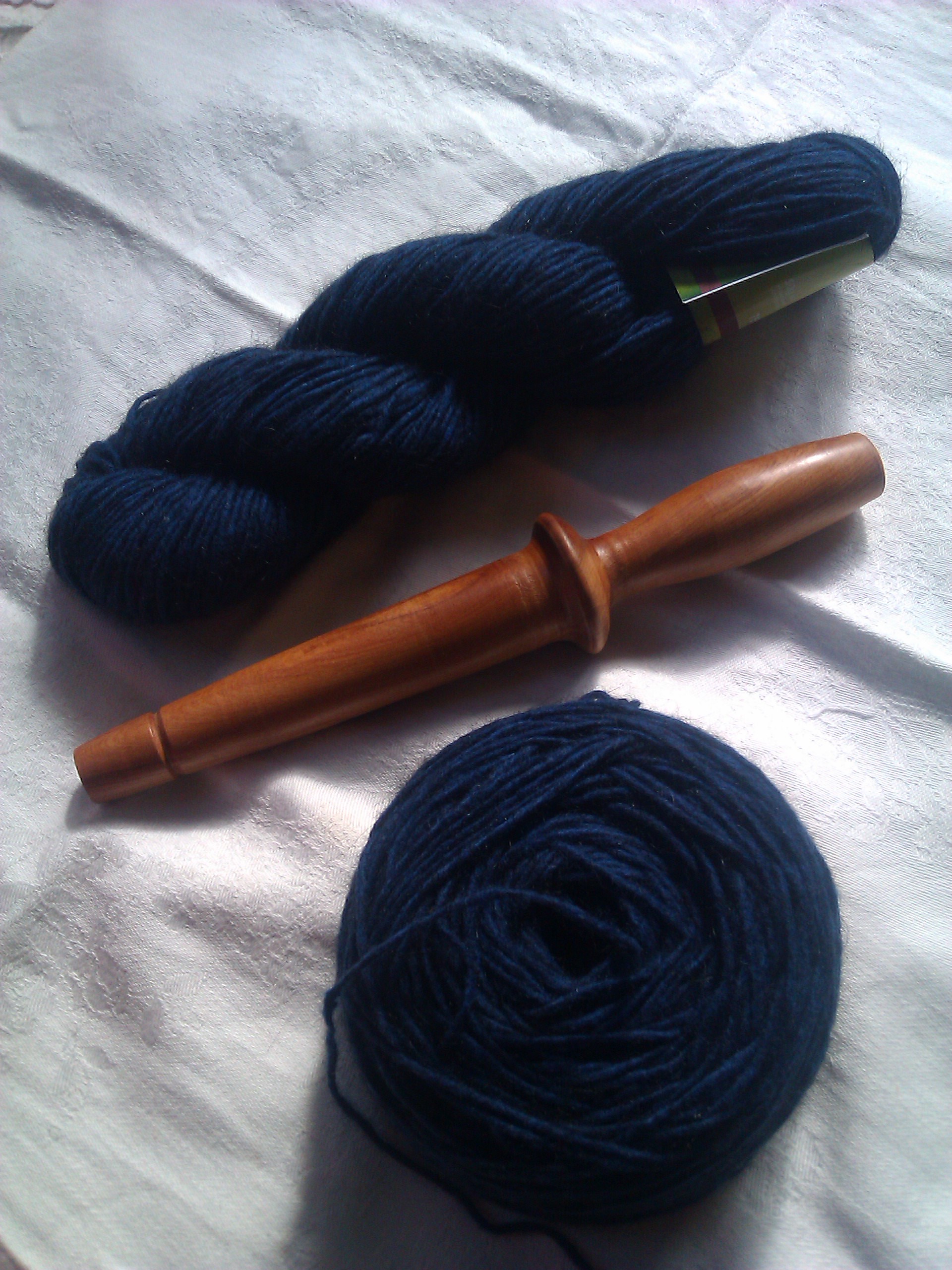
The treasure for which I was so eagerly waiting was a set of interchangeable circular knitting needles, the apogee of knitting needle technology. First there were straight needles, then double-pointed needles or DPNs, then fixed circular needles, and now, at last, the inexorable march of progress brings us the interchangeable circular knitting needle. (Once we have accumulated sufficent spondulicks.)

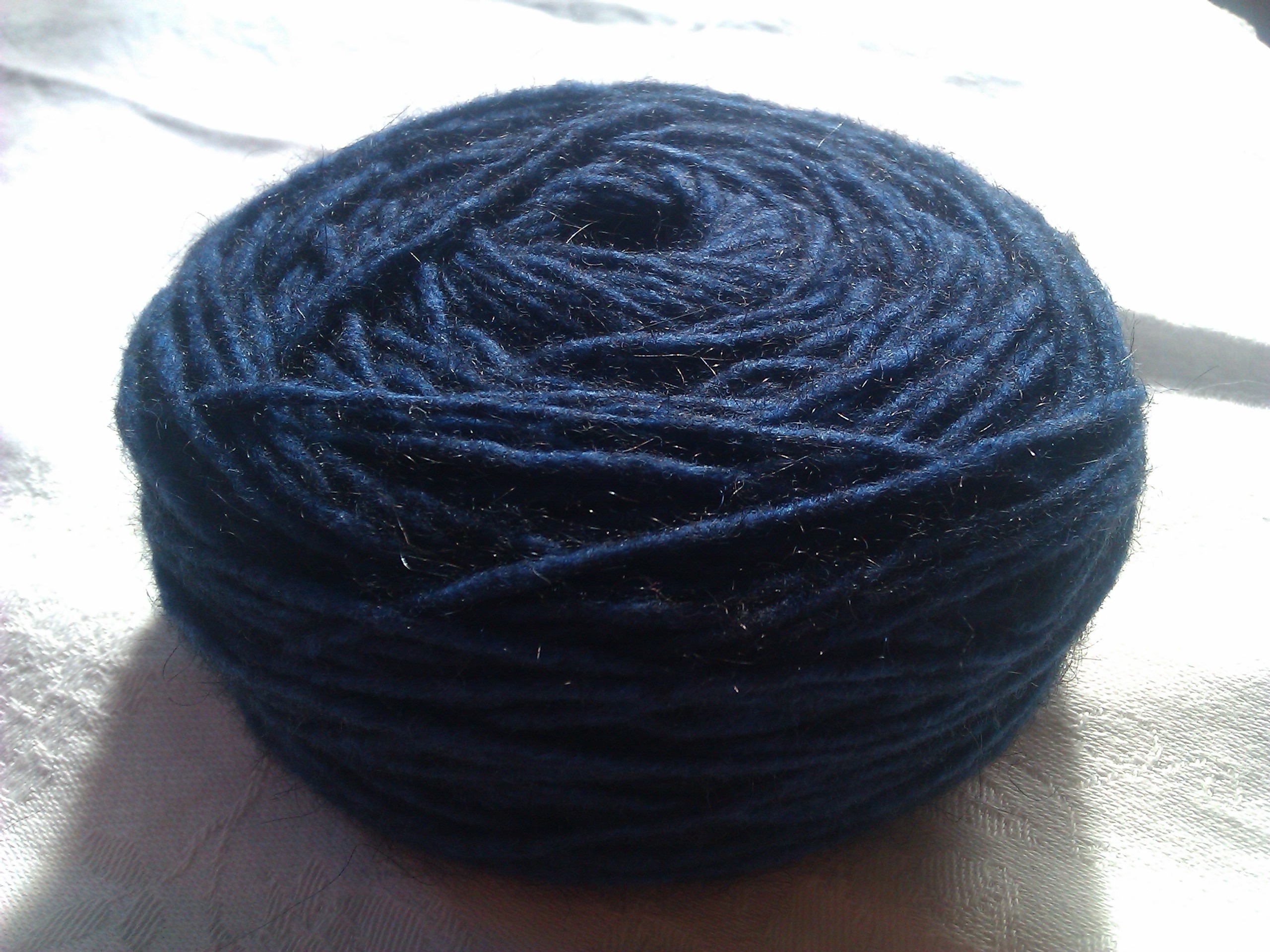
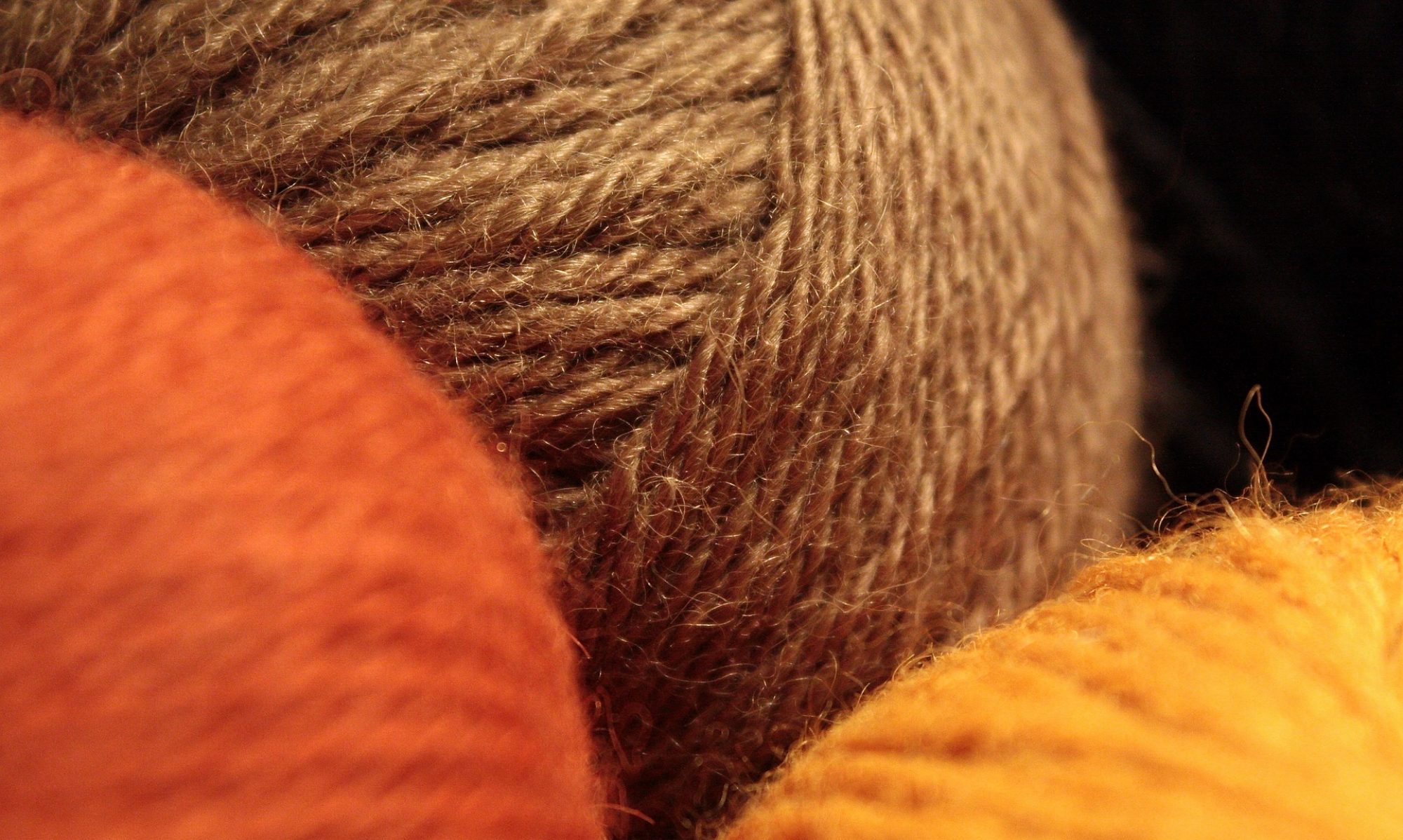
Ball of Yarn 5-1-09 1

The set I got is known as the Karnation set, despite this name not being mentioned on either the merchant’s website (eknittingneedles.com) or the packaging. It’s not the usual way of marketing a product, but then, they apparently keep selling out, so they must be doing something right.

This set has 13 colour-coded sizes of aluminium needle (2.75mm up to 10mm) with five different lengths of cord (16in to 4ft). That is the equivalent of sixty-five different interchangeable needles, even if you don’t take into account the possibility of linking two or three of the cords together to create a needle so long you can skip with it. Or knit a blanket in one piece. Although maybe not both at the same time.

Two cord-connectors are included with the set, along with a rubber pad and a couple of little key-wires so you can tighten the connections to the point where you can’t undo them by hand (nor, more to the point, by knitting with them). There are also a packet of end-caps (to hold stitches on a cord while you are using the needles with another cord) and a card which tells you which of the colour-coded needles is which size. This all comes in a surprisingly small black zippered case (about 18 x 20 cm, closed). It looks something like this:

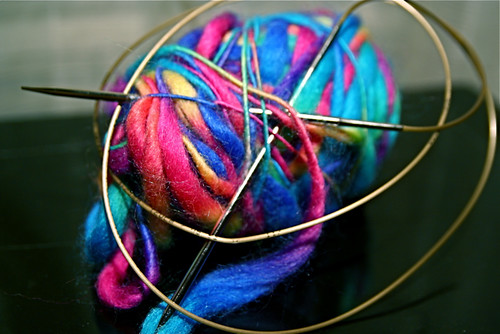
Knitting needle set

On the downside, the shortest cord (16 inches with needles attached) is so short you can barely get the needles’ points to meet. On the plus side, it’s still useful as a stitch-holder, or an extension to one of the larger cords.

The only thing I don’t like about this set is that the smallest needle is 2.75mm, which, while not huge (and smaller than a lot of sets go), is still larger than I use for a number of things, most notably socks. And this is where the delay came in handy: as compensation for waiting so long, the merchant offered me a 20% discount, which I took up in sets of double-pointed sock needles (three, the smallest of which is 2mm).

Of course, once I had this equivalent-of-sixty-five-circulars set, I had a lot of old needles I no longer needed, so ‘sorting out the knitting needles’ became an important item on the July purging list.

pruning-shears-24437_640

In July I purged:
nine circular needles (of various lengths and widths)
three pairs of straight needles (ditto)
and nineteen books, including poetry, prose, and reference.

This may seem like a short list, but to a bibliophile, purging books is a slow and arduous task. I’m lucky I have my knitting to help me stand the strain.

Lesendes Mädchen 19 Jh

Knitting Handcuffs

Bundesarchiv Bild 183-E0127-0091-003, LPG Schenkenberg, Mitglied der LPG

Old Flossie settled down on the other side of What-the-Dickens and dragged some handiwork out of a sack. She armed herself with two thorns shaped into knitting needles. A wodge of curlicued metallic scrubbing pad supplied the thread.
“I knit handcuffs as a hobby,” explained Old Flossie happily, and set to work. “Idle hands get up to no good, so I like to be prepared in case I meet up with any idle hands.”
from What-the-Dickens: The Story of a Rogue Tooth Fairy by Gregory Maguire

Brain Status: Updates Complete

They say the brain is like a computer. They never mentioned that it was one of those annoying ones that is always needing updates, but doesn’t do them automatically.

Henry Markram: Brain research & ICT futures

No, the brain needs to be updated by the old-fashioned method of knowledge acquisition we call learning. If you stop learning, your brain gets obsolete and will eventually crash. Of course, when updating one’s brain it is important not to allow in any malware or viruses, but that’s another post.

I am both a good student and a bad one. Good, in that I like to collect information, always learning something new; and bad, in that if I don’t master something at my first try I am liable to give up. Seriously. There is only one subject I took all the way through high school: English, a.k.a. my mother-tongue.

So obviously I have a lot to learn, both in terms of facts/skills and character, and I like to think that knitting is helping with this. Apparently knitting can delay the onset of Alzheimers, basically because it’s exercise for the brain, using a variety of different areas and making them work together. Sounds good to me.

Хруцкий Старуха вяжущая чулок(1838)

Knitting is also developing my character, because it forces me to persevere when I don’t get it right first time: witness the number of unsuccessful attempts before I learned to turn a heel. It is helping me develop that difficult virtue: patience, in a relatively pain-free way.

I haven’t knitted socks in a couple of years, but just lately, I have returned to them, after diverging through various scarves, a balaclava and a stegosaurus, among other things. This time, I’m trying the socks from the toe up. As Joe Blomfield said, “There’s a great deal of engineering in a gentleman’s sock, I’ll have you know.” Ditto for ladies, or even, heaven help us, people whose feet are so small they don’t even walk on them, viz. babies.

Toe-up has a distinct advantage over cuff-down, namely that you don’t have to guess when you’re going to need to start the heel in order to have enough yarn left to finish the foot – risking ending up with no toes. You just keep going up the leg until you don’t want the sock to be any longer, or you run out of yarn, whichever comes first.

FO: Pedi socks

The difficult bit is that you don’t start with a nice simple tube: you start in one of a variety of ways, all of which are mind-bogglingly complex in description, not much better in diagram, and only somewhat confusing in video, because the knitter demonstrating the technique may well be knitting a different method or style from you.

I have, however, learned (and by learned I mean got it wrong a couple of times and then got it right) Judy Becker’s Magic Cast-On – it’s not the cast-on called for in the pattern, but I’m not going to let that stop me. The pattern is also for stripy socks, and I’m just using one variegated yarn.

Knitting, you see, is like cooking: adapting the recipe and substituting your own ingredients are expected – so much so that a lot of patterns don’t even bother giving instructions for the interchangeable parts, they just tell you to start with your favourite cast-on, and then use your preferred heel here, and so on.

And then a miracle occurs.

Speaking of preferred heels, I have also knit my first short-row heel – the pattern fortunately gave detailed instructions (which is why I chose it) and I watched a video of someone demonstrating the technique as well, which helped. Some things do not make sense in description until you actually know how to do them, which rather defeats the point.

Having tried this method of heel construction, I think I can honestly say that I will quite likely never knit a heel-flap-pick-up-stitches-along-the-side sock again. I loathe picking up stitches. Maybe it’s just the difference between my row gauge and stitch gauge, but I always seem to end up with a gap.

I also recently learned the “Magic Loop” method of knitting in the round, which may one day be of use in sock knitting. Unfortunately, my smallest circular needle has a diameter of 2.75mm (US#2), and the sock patterns I’ve seen generally call for 2mm (US#0) or sometimes even smaller. The ones I’m using now are 2mm bamboo needles, which flex slightly as you handle them. It’s rather like knitting with extra-long toothpicks.
But I’m learning.

What have you learned lately – skill, fact, or otherwise? Share the learning, share the love!