
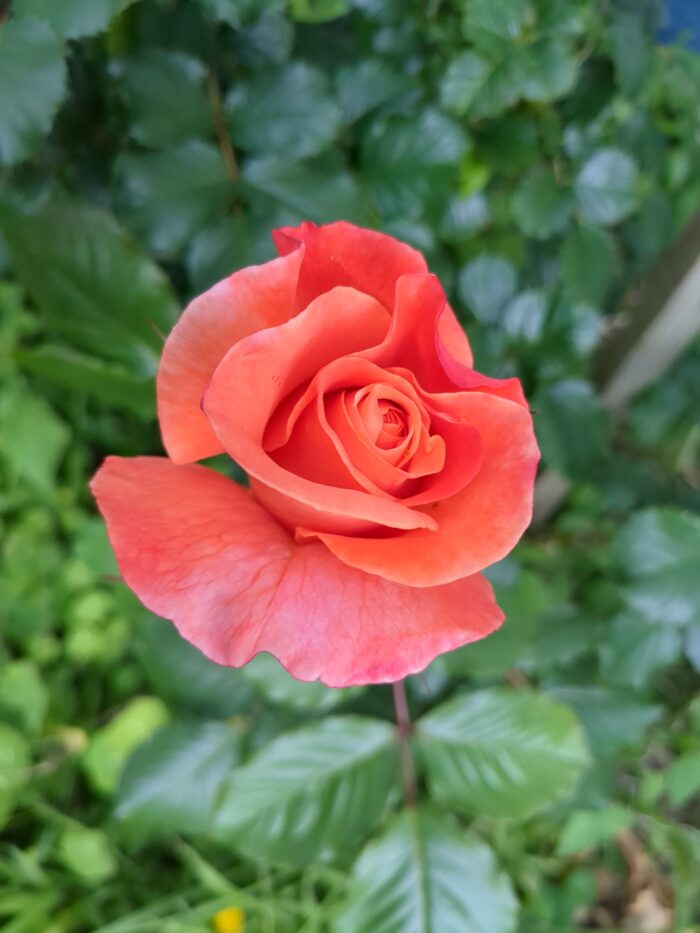
The season of roses continues with the Westerland finally chipping in. As mentioned in my last post, its ambitions have lain more in the direction of elongated stems than flowers, but as it has topped the latest elongated stem with approximately 20 buds, that may be about to change. In the meantime, here is a bloom on a stem which didn’t get the skyscraper memo.
Interesting Times
Those born into slavery are seldom free to make their mark on history (except sometimes in bloody revolts, as with Spartacus or Toussaint L’Ouverture). An exception is Marcus Tullius Tiro – better known as Tiro, since the Marcus Tullius bit came from the man who owned and then freed him, Marcus Tullius Cicero (better known as Cicero, since it’s shorter and easier to remember).
Tiro’s mark on history was genuinely a matter of marks: as well as authoring a number of books (biography, grammar, etc), he is believed to have developed one of the earliest forms of shorthand, known as Tironian notes. Some notes are still in use, such as the Tironian et (i.e. and), also known as the ond, which looks like this:

To have an Inktober’s worth of letters in my alphabête, I added to the classic 26 letters of the alphabet yogh, thorn, eth, wynn – ƿ, which replaced uu for the w sound, before being inexplicably replaced by uu again – and ended with an ond (see below).
Nature’s Freaks, Fancies, and Fascinations
Floral colour change is the technical term for flowers changing colour – surprise! – which can be due to chemistry (see: hydrangeas changing colour based on the acidity of the soil) or getting pollinated (presumably to alert bees that they’d do better buzzing off to a flower that still has pollen to pass on), or simply “senescence” i.e. fading because it’s getting old.
The fading of roses falls into the latter category. Remember the glowing-coal effect of the Westerland rose at the start of the post? Here it is two days later.
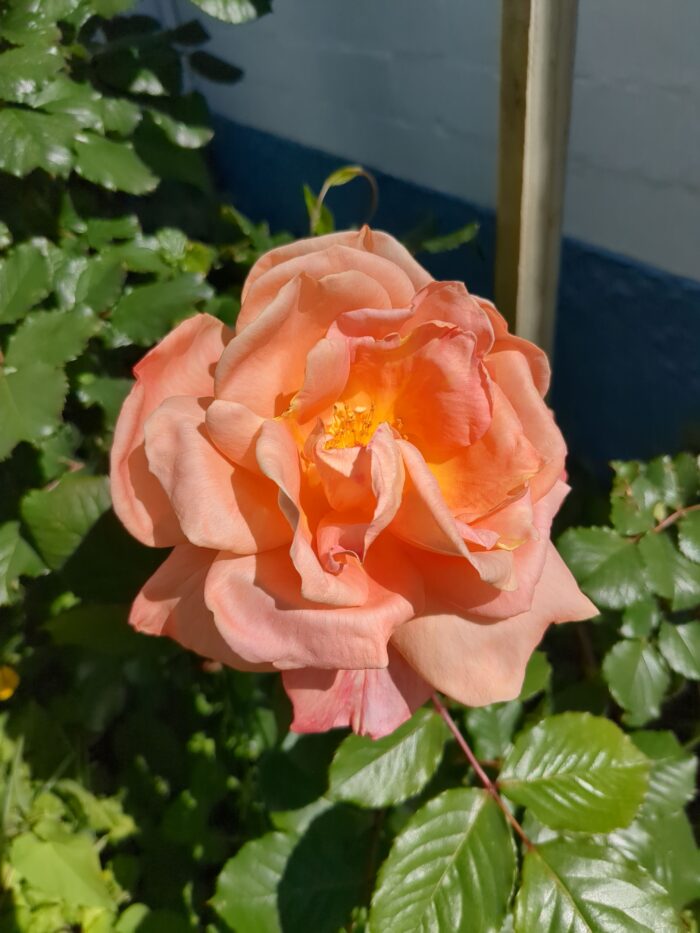
Not just the same variety, not just the same plant, the same bloom. Which is a not inconsiderable part of why it is so difficult to choose a rose variety for your garden based on the colour of its flowers.
And Now For Someone Completely Different
“It is easy to think the State has a lot of different objects — military, political, economic, and what not. But in a way things are much simpler than that. The State exists simply to promote and to protect the ordinary happiness of human beings in this life. A husband and wife chatting over a fire, a couple of friends having a game of darts in a pub, a man reading a book in his own room or digging in his own garden — that is what the State is there for. And unless they are helping to increase and prolong and protect such moments, all the laws, parliaments, armies, courts, police, economics, etc., are simply a waste of time.”
C.S. Lewis
Latest Library Loot
Bryant & May is a brand of matches. And also a pair of curmudgeonly old detectives working for the Peculiar Crimes Unit in London (King’s Cross, after one of them burned down the old premises in Mornington Crescent). I have yet to tuck into any of Christopher Fowler’s novels featuring this pair, but I certainly enjoyed the ingenious stories in the short story collection Bryant & May: England’s Finest. The novels are going on my library list.
There are many how-to books which will teach you techniques for this, that, or the other creative pursuit. Of the making of many books there is no end, as Solomon sapiently observed (Ecclesiastes 12:12). But where will you find a book that teaches you how to pursue a creative pursuit? The book you are looking for is Dare to Create! – originally titled J’ose créer – by Marie Boudon (translated by Marie Deer). The 35 “challenges” include finding time, setting goals, removing mental blocks, creating your own exercises, and having fun. This one has graduated from my library list to my “books I’d like to own” list.
The film Charming follows the story of Prince Charming, cursed in his cradle with excessive charm. Before he has even officially come of age, he is engaged to Cinderella. And Snow White. And Sleeping Beauty. And has a mob of swooning women pursuing him whenever he steps outside (closely followed by a mob of enraged husbands). Clearly, it’s Time Something Was Done. While Charming could have been improved with some more honing of the script (how does the villain get those powers?), it’s a better watch than many reviews seem to give it credit for. I particularly enjoyed the Half Oracle, who, being blind in only one eye, is only right in her prophecies half the time.
By My Own Hand Or None
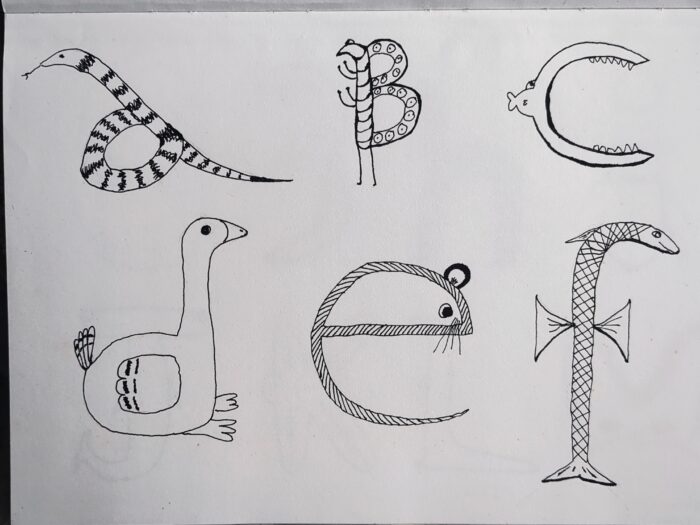
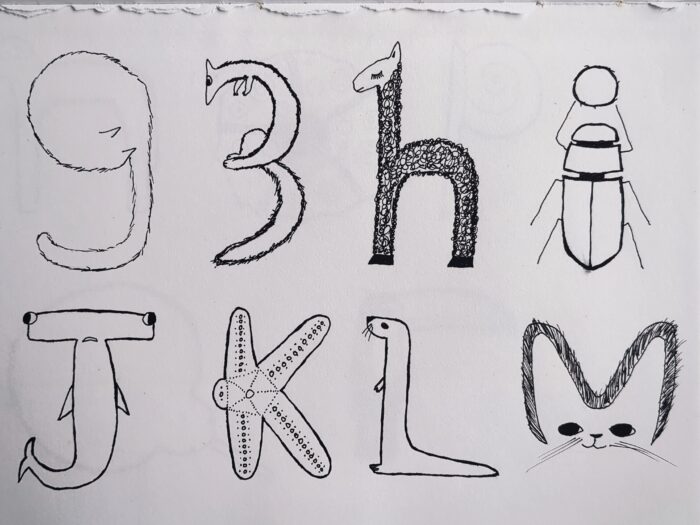
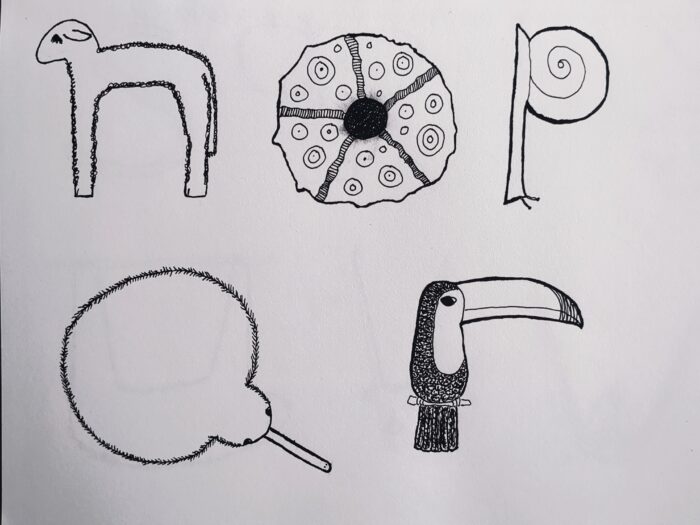
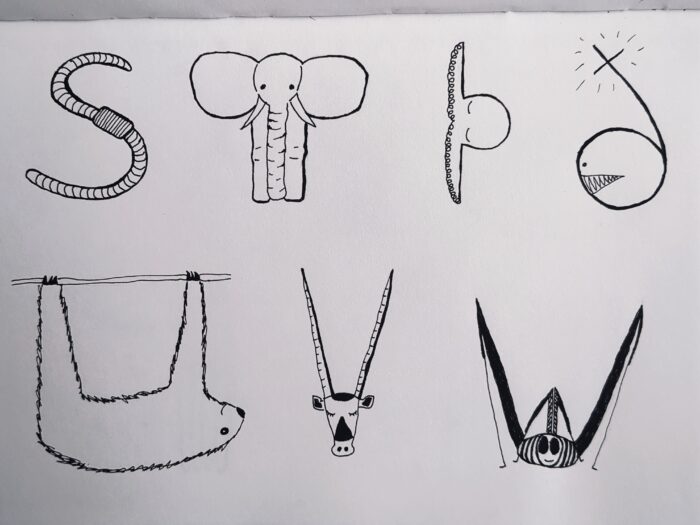
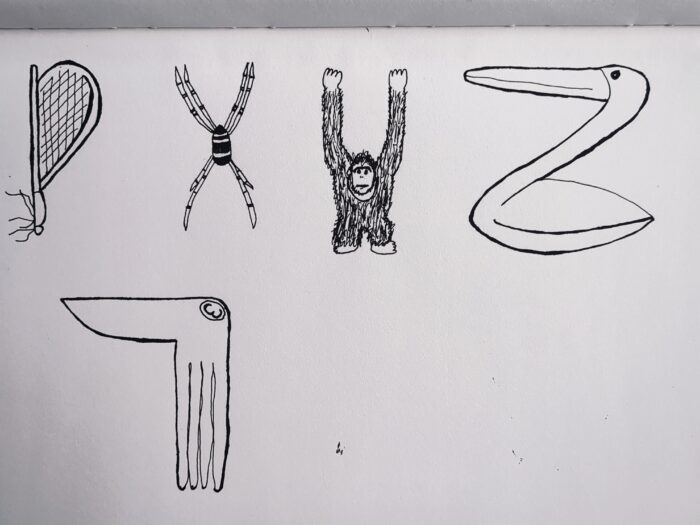
I had originally intended to post these last week, on the last day of October (and therefore Inktober). Unfortunately my health went blooey near the end of the month, and I didn’t even manage to do the last two drawings (the z and the ond) until today. So it may not be an official win for Inktober, but I’m still glad I did it. It was excellent practice, and very often great fun as well. (My favourites are the e, the g, the J, the K, and the r.)
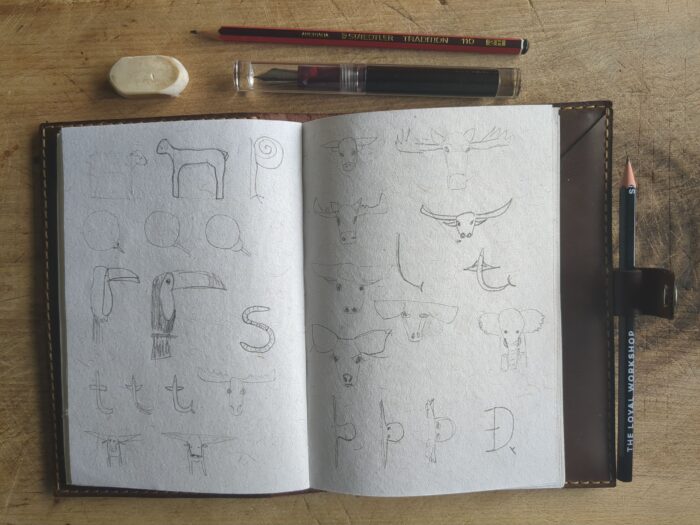
I started each letter with draft sketches in my Loyal Workshop journal, using the pencil that came with it. Once I was happy with an idea, I drew it in my A4 visual journal with a 2H pencil (and often the aid of an eraser). Once I was happy with it, I switched from left hand to right hand, and from pencil to ink (Jinhao Black in a Moonman/Majohn C1, EF nib). Once it was dry – or occasionally just before – I erased any visible pencil lines.
I already have ideas about what to draw next…
For Your Consideration
If fairies of dubious benignity had been present at your christening (assuming for the purposes of this question that a) you had a christening, and b) fairies exist), what would you be inclined to suspect they had bestowed upon you? I’d guess imagination, myself: professionally very useful, but has its downsides at 3am when you hear a strange noise downstairs…