Making Plans

The eternal question (well, one of them, anyway): how much planning should you do before you begin to write?
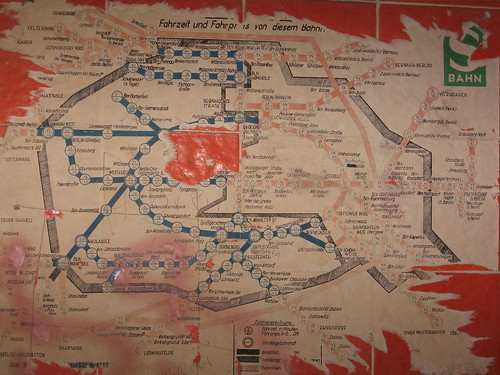
Plan of the old railnetwork

Obviously, this depends a lot on a) what kind of writer you are; and b) what kind of thing you are writing.

Some writers can’t start ‘actually writing’ until they’ve exhaustively planned every last detail and diagrammed it all out, with every detail of their characters’ lives already known. (This can result in gratuitous prequels – I am looking at you, George Lucas.) If you dream of index cards and colour-coding, you may be this kind of writer.
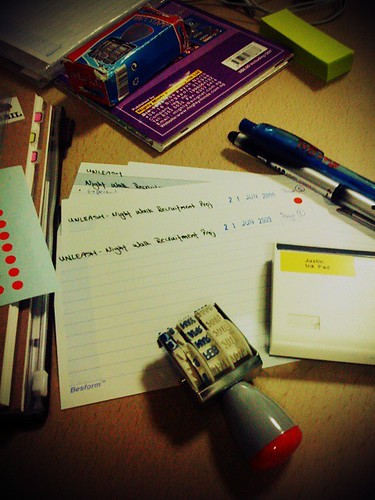
Weapons for work

Others just let it all bubble away in their heads until the time is right. Isabel Allende, for example, always starts writing her books on the same day of the year – an approach that would drive me batty. If you take this approach – well, you have a better memory than I do.

Others just leap in there and figure it out as they go. This tends to result in a very… catholic first draft, in which both beginning and end can seem to belong to different works from the middle.
A Year's Work

I’ve just realised that I hate (strong word – perhaps feel very uncomfortable with) not knowing where I’m going – or at least where I’m up to. With no plan, there is little to measure progress against. Which is depressing. Call me a feedback-hound, but without encouragement of some sort my motivation to keep going rapidly dwindles.

On the other hand, if I plan too completely (or concretely) I lose all motivation to write the blessed thing – there is no element of discovery, no reading the tale as it unfolds.

Now, as previously mentioned, this is also affected by what kind of thing you are writing.

Prose, I find can be happily wallowed through until you get to the other end and find out what it’s turned into. Then the rewriting begins.

Scripts – particularly for the screen – need a lot more structure. (Unless you are an avant-garde script-writer, in which case you get to make up your own rules but largely have to pay for them yourself.) There is the oft-mentioned board (ideally pinned, but more often floored), on which is plotted out the course of the story, in varying levels of detail.

Nanowrimo Story Board

Poetry, I suspect, requires a balance of the two. Or it might be that this form is the most dependent on the person writing. I usually just went for it in the beginning, with whatever inspiration came to hand, and then shaped the rest around that, although I don’t know that I’d recommend it as a poetic approach. (Thoughts?)

At the moment, my Works In Progress include mostly scripts (stage and screen) and one novel, which is the WIP I’m actually W’ing on.

I tend to try planning everything out ahead of time with the scripts, which sometimes works and sometimes doesn’t.

One of my stage scripts can be redrafted mostly from the first draft (plus new material); the other will want new plans drawn up. It’s like the difference between building an addition and doing a complete rebuild with recycled material from the original structure.

The film script is still very much in the early planning stages – more blueprints than actual building at this point.

With the novel, I have a rough structure in mind – a sketch map, in fact – but I don’t actually know exactly what I’m doing with it, or how long it’s going to take. I am, in fact, making it up as I go along.
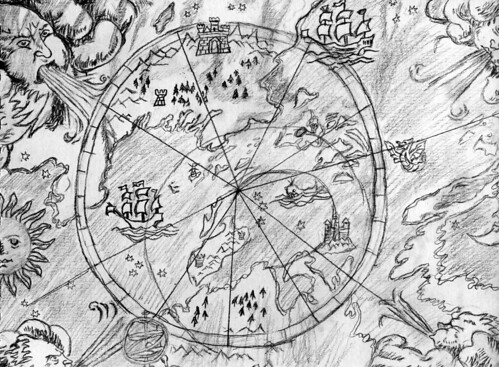
Fairy tale map

Entirely new characters show up and demand to be included. Simple places turn out to be complicated little worlds of their own.
It feels like it’s taking forever, but at least when I reach the end everything will be in there. Although I may need to do quite a bit of retrofitting.

But here’s the hard part: I am a structure junkie.

Vladimir Propp did not appear on this blog by happenstance. Three act structure, five act structure, the Hero’s Journey – if there’s a pattern, I want to know about it.

But I think sometimes (all right, often) I use it as a means of procrastination – of abdicating responsibility. The structure will tell me what ought to happen next, and which roles need to be filled, and then I won’t have to work it out the hard way, by actually writing the thing, and finishing it, and then going back and thinking no – that shouldn’t be there, and this should be over here, and why are so many people doing this and no-one doing that?

So there is my struggle. Bit by bit I must bring this thing into existence, and not know til the end (if then) how malformed and lifeless it may be, how much of my work, how many dark mornings and weary evenings, must be cut away and cast off like excess clay from a sculptor’s model.
The pen is mightier than the sword....

“We work in the dark – we do what we can – we give what we have. Our doubt is our passion, and our passion is our task. The rest is the madness of art.” Henry James
Stoking the Fires

Most of the time we are not writing.
This is largely due to the Dreaded Day Job.

Ideally, of course, one would either have a job which fuelled the creative juices, or a job which left your mind entirely free for thinking about writing. (All right, ideally one would be able to write as much as one liked with no outside work and an enormous stipend, but join me in the real world for the sake of the argument. Also, bring back the non-ironic use of the gender-neutral indefinite pronoun. Thank you.)

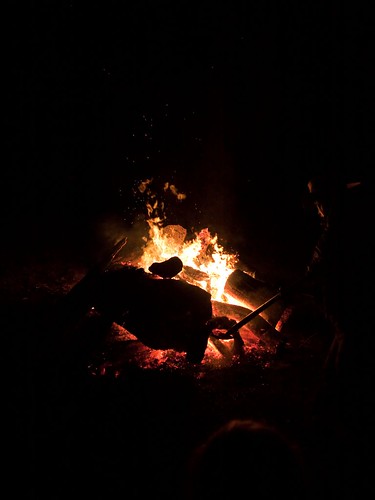
If one does not have such a convenient job, the cold hard reality is that there’s precious little mental space left for the Work In Progress. One has to make the most of what time one has – to stoke and tend the fires of inspiration, so that when time is available. one wants to write – and is ready to write.

The Stoker

So how does one do this?
There are many strategies, but unfortunately a lot of them double as prime forms of procrastination.

Reading about writing is one of my favourites.
Reading books about how to write, books about writers I admire – they fill me with enthusiasm. Reading books in a similar genre or tone to whatever I’m working on – at best, they fill me with an envious delight (I wish I’d written that!) and at worst, they map out pitfalls to avoid in my own work.

The useful thing about reading about writing as opposed to writing itself is that it can be squeezed into any little gap in the day, providing there is a suitable book present.

Do I detect a resemblance?

Picking up a book and reading comes naturally to me (not picking up a book and reading requires concentration and effort), whereas picking up a pen and writing requires preceding thought and usually the spreading of associated papers over a wide area.

Daydreaming about the Work In Progress is even more handy for stolen moments here and there as it requires no paraphernalia. The downside is when one has a earth-shatteringly brilliant idea (perhaps the seed word for one’s WIP) and finds one has no way of writing it down.

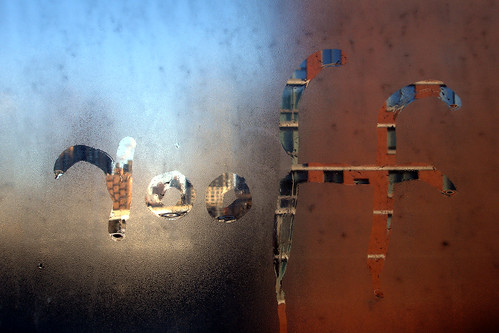
Of course, writers are advised to keep pen and paper on their persons at all times, but even writers need to bathe. (please note: words written in condensation on shower walls are seldom legible afterward.)

hooooor

While in the throes of the Dreaded Day Job, one can also use such things as images and music to seize the imagination and recall the mind to the story underway.

Perhaps your DDJ allows you to use a personal music player (of whatever sort) – then play yourself the soundtrack to your tale.
Or images – I often to change the wallpaper on my work computer to something that reminds me of my story, and every time I see it I get a little thrill of excitement, as the story flows through my mind again.

The I of The Forest

In fact (and I am sure I am not the first writer to whom this has occurred), the whole business of feeding the flames of writerhood is remarkably analogous to other forms of devotion – whether human or divine.

We dream of our beloved. We talk about our beloved to anyone who is prepared to listen (or too polite to run away). We cherish art and music that remind us of our beloved, and we want to learn everything there is to know about them.

There is no question here of chores, or duty. Every moment we can snatch with our beloved is a pleasure, a golden trophy plucked from the mire of workaday life.

Tell me, how do you keep your fires burning?

February: a Sense of Identity

Do you have a person in your life whose ego is poisoning your creative well?
I don’t.

I am happy to say that all Julia Cameron’s descriptions of ‘crazymakers’ do not fit with any of the friends and family I have in my life. Admittedly, my roll of friends is not a long one, but quality beats quantity every time (except possibly in NaNoWriMo.)

Of course, it is well known that you can’t choose your family, so my thanks go out to any relatives who may be reading this for not being egomaniacs who insist that my world revolves around them. (I’d send you flowers, but all I seem able to grow are dandelions and buttercups.)

Untitled

However. On with the chapter.
I have already made some mention of the ‘recovery of identity’ theme in my previous post, so, straight on to the Tasks!

Task 2 reveals there are 168 hours in a week, of which I spend 40 at the Dreaded Day Job, five getting to and from the DDJ, and five more of a morning getting ready for the DDJ.

63 hours are spent asleep (if I’m lucky) and 13 either preparing food or eating it. (That seems like a lot. Divide by 21 meals per week and it doesn’t seem quite so gluttonous. I think.)

That leaves about 41 hours for housework, reading, writing, resting, handwork and relationships with God, the universe and everyone.
The proportions thereof would, I think, repay more study than I have so far given them (navel-gazing not being on the above list).

My extended list of imaginary lives (Task 6) now includes a peasant, a princess and a mute. Kind readers will refrain from suggesting how I might incorporate the latter into my everyday life.

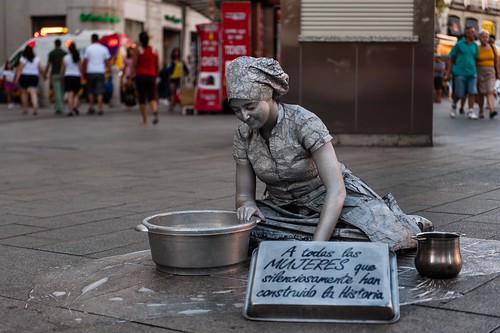
'A toutes les femmes qui silencieusement ont construit l'Histoire'

My life pie (Task 7) seems to have been involved in a side-on collision – exercise and romance are doing well, with spirituality holding its own, but friends and play are looking a little saggy and work is – well, the less said about work the better.
Moving on.

Ten tiny changes was a very enjoyable exercise. Although I haven’t done or started all of them, they are mostly quite achievable (#10, eat Weetbix, #5, light a candle).

#2, Have a Teapot, is accomplished, and very enjoyably. It turns out the secret to successful teapot-hunting (besides going when the charity shops are open) is to stop looking for the perfect teapot, and find the good teapot.

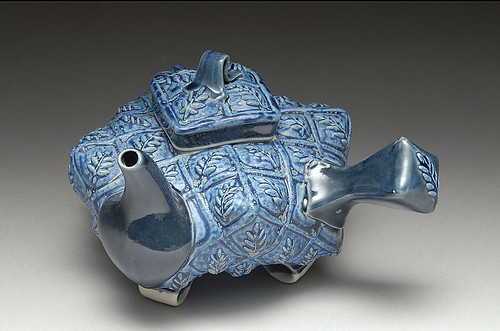
Blue Leaf Teapot
This is not my teapot.

The perfect teapot is probably better than the good teapot, yes, but you can’t drink tea out of it until you find it, which could be never. Imagine the prospect of drinking tea disappearing over the event horizon. Shudder. Buy the good teapot.

There’s probably a life lesson in there somewhere.

For my artist’s date, I was going to follow the tradition (i.e. the thing I have done once before) of spending $2, but there was a sale, so this week’s Artist’s Date is brought to you by the number 1.

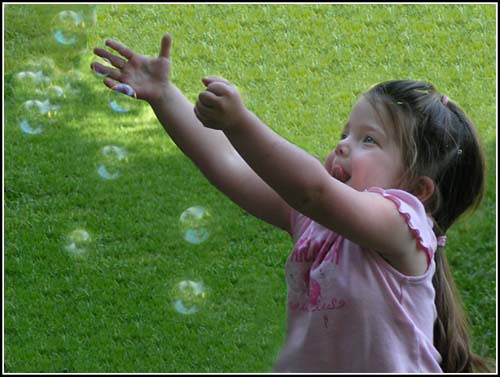
bubbles

Bubbles!

Do we detect a trend of childlikeness here? Well, what of that? As the Artist’s Way says, don’t drag your inner child to a museum unless they’re that kind of child. Or it’s that kind of museum. (I paraphrase.)

Next month (this month) I delve into Recovering A Sense of Power. Muaahahhahaaah.