the Master Metaphor

I recently read The Creative Compass by Dan Millman and Sierra Prasada, and came across the really rather interesting idea of the Master Metaphor. To quote:

“At some point in your life, perhaps more than once, you achieved something, despite the odds against it, because of a longing or determination that you can’t fully explain. It might be a skill that initially seemed out of reach or a one-time accomplishment: jumping off the high diving board, delivering a speech at a school assembly, or travelling to a distant country. That experience, as distinguished by the inexplicable feeling that accompanied it, forms your Master Metaphor.”

It doesn’t have to be an accomplishment that the world deems great, it just has to be something that was hard but you did anyway. A symbol of your ability to succeed against whatever’s pushing the other way – tiredness, lack of ability, your own character flaws.
It’s the ace up your sleeve you pull out when the chips are down. (Mixed metaphor? Not sure.) I did that, I can do this, you tell yourself.

It took me a while to figure out what my Master Metaphor could be, given my propensity for giving up if I don’t get it right the first time, a besetting flaw if ever there was one.
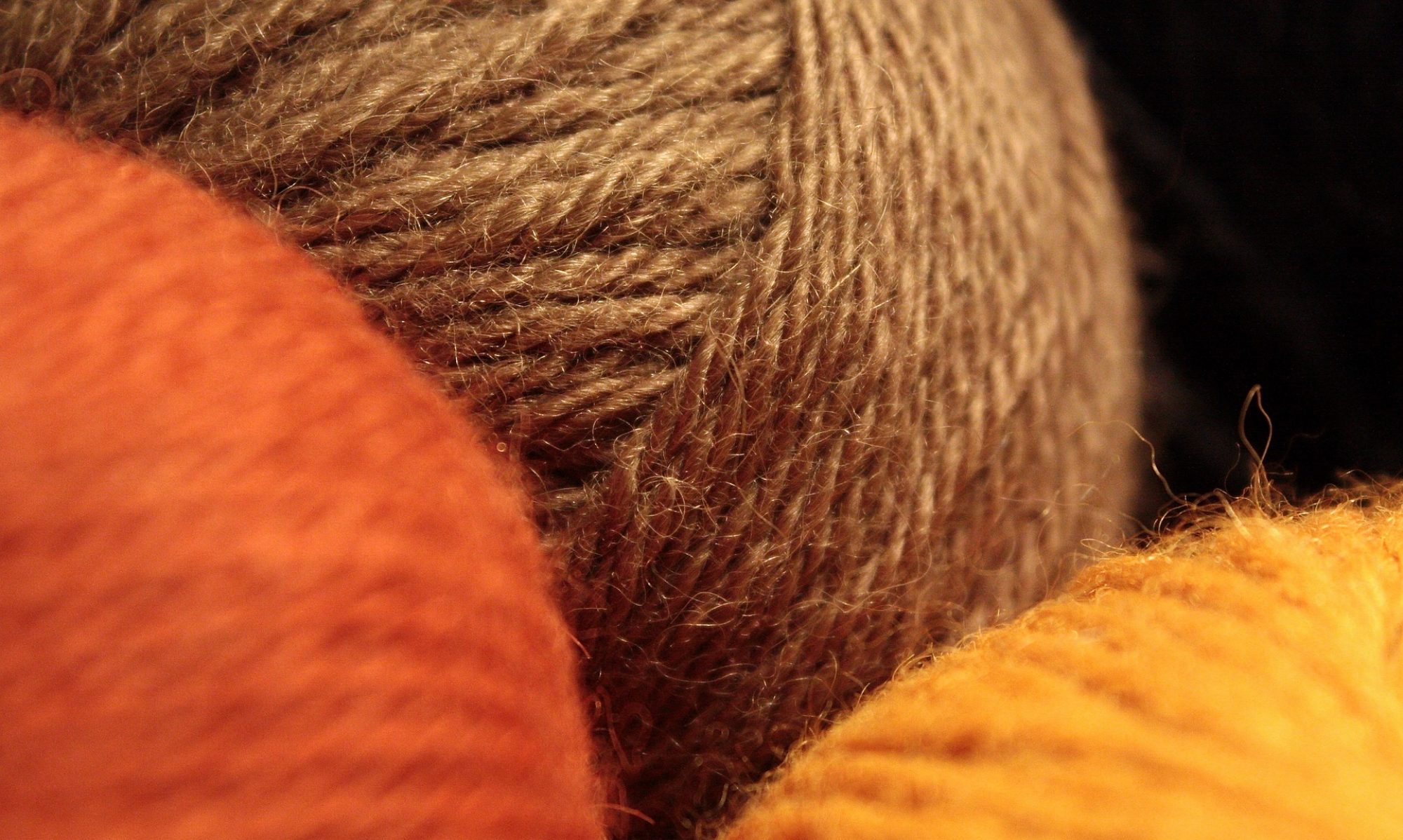
Then it came to me. Socks.

Not the sort Polly Oliver uses to -er, bolster her male impersonation, nor yet the shortened form of ‘Socrates’ with which Walter Judson tries to maintain a philosophic calm on the golf course.

To be precise, turning the heel when knitting a pair of socks. I have mentioned before how long it took me to figure out how to do it, even with a clear and simple pattern to hand. I’m surprised I persevered, given that I had no pressing need to knit socks, only a pressing desire, and that much shaken by repeated failure.

The problem was that I couldn’t see how what I was doing was going to produce the desired result. I couldn’t visualise how it all went together, so in the end I just had to carry on in faith that it would turn (pardon the pun) into a heel. And it did.

That’s a good metaphor for writing right there. You get your structure sorted (the pattern) and then you just keep going even if it looks like nothing on earth, trusting that it will come out the right shape if you just keep going.

So what’s your Master Metaphor? And do you know any good patterns for socks?

Are You Obsessed?

I’ve always had obsessions. Some idea or project or subject will suddenly loom large in my mind and I can’t stop thinking about it. For a while, anyway.

For some reason I’ve always thought that if the obsession wasn’t going to last I should quell it as much as possible. Obsessions do pass (although some are recurring) and it seemed wasteful to pour so much time and energy into something I’d have moved on from in a few weeks’ time.

In my youth (all right, even now) I enjoyed completing questionnaires which purported to tell you something about yourself, whether serious (Myers-Briggs) or not (What Punctuation Mark Are You?*).

It was after completing one of the never-occasionally-sometimes-often-always variety that I realised I had only one ‘always’: when you are interested in something, do you want to read up on it?
Yes. Frequently more than I want to actually do the thing itself, which seems silly but saves a great deal of investment in short-lived fads.

I’ve had obsessions of various lengths with millinery, embroidery, steampunk, jesters, historical costuming and various periods of history including the fall of Tsarist Russia, Anglo-Saxon England, the Regency era and the social history of World War II – among other things.
And it all goes into the files for later, although as Kristen Lamb points out, writers tend to be ‘Masters of “Things Few Know and Fewer Care About”.’

I recall reading yet another book of self-understanding-through-classification which described people who collect information (this is me, I thought) showing their love for others by sharing bits of their collection with them. So to all who I have ever bored with random snippets of knowledge you never cared to know: I love you.

And then I came across this quote from Tamora Pierce: “The best way to prepare to have ideas when you need them is to listen to and encourage your obsessions.”
The relief! The validation! Importantly, not only can obsessions be useful to the writing life, but it isn’t just me. It’s lots of us. It could even be you.
So how do you tell if you have acquired a Writer’s Obsession? A questionnaire, of course 😀

1) Are you lying awake dreaming about it? (1 point per hour spent.)
2) Are you lying asleep dreaming about it? (2 points per dream.)
3) Do you have three or more library books on the subject at once? (1 point per book; double points if you bought them.)

Is this you?

4) Have you read all the books the library has on the subject, leaving you prowling the aisles in a frustrated search for more? (Two points; three if it’s a large library or you have access to interloans.)
5) Do you keep bringing it into conversations where it may or may not belong? (1 point per conversation.)
6) Are you marshalling your resources of spare time days ahead in order to maximise obsession-time? (1 point per day ahead multiplied by: 1 if you’re calculating in hours; 2 by half hours; 3 by 10-15 minutes.)
7) Do you trawl the internet by the hour, looking for a) information and b) some poor sap who’s as obsessed as you are? (1/2 a point per hour spent, doubled if you should have been doing something else at the time; and don’t worry, we’re here.)

If you had to get a piece of paper and a pen (or take your socks off) to calculate your score, you have an obsession! What is it? Do tell! All correspondence welcomed!

*semi-colon