
As far as her mom was concerned, tea fixed everything. Have a cold? Have some tea. Broken bones? There’s a tea for that too. Somewhere in her mother’s pantry, Laurel suspected, was a box of tea that said, ‘In case of Armageddon, steep three to five minutes’.
from Illusions by Aprilynne Pike
The Importance of Unwinding
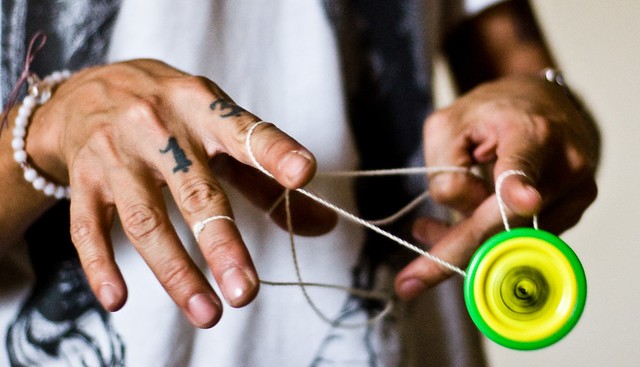
You need it, I need it, we all need it. Something that will allow us to relax and let the string spool off the YoYo of Stress. If you don’t take the pressure off now and again, you go pop! like a weasel, and that isn’t good for anyone.
 The key is to find the things that relax you, and make sure you make time for them. It sounds a bit self-indulgent, perhaps, but consider these words from the philosopher and theologian Thomas Aquinas. “It is requisite for the relaxation of the mind that we make use, from time to time, of playful deeds and jokes.” In other words, lighten up a bit.
Seneca the Stoic agrees. “We must indulge the mind and from time to time allow it the leisure which is its food and strength.” His suggestions include going for a walk to get plenty of fresh air, going on a trip for a change of scene, or having “social meals and a more generous allowance of wine.” There you are, then. Be stoic: take a walk with friends to the nearest pub. Or consider the Cowper Cups that “cheer but not inebriate” – nothing like a nice cuppa when you put your feet up.
 Jane Austen’s heroine Fanny, in Mansfield Park, says “to sit in the shade on a fine day and look upon verdure, is the most perfect refreshment.” Many others before and since have shared this view, although Mary Crawford (she of the flexible conscience), proclaims “I must move… Resting fatigues me.”
Others favour a creative pastime, or reading, or listening to music, or taking long hot baths. The poet Dylan Thomas claimed that “Poetry is not the most important thing in life… I’d much rather lie in a hot bath reading Agatha Christie and sucking sweets.”
When the Caped Gooseberry and I were preparing to marry, we went through a thingy designed to bring to our awareness any issues that we might have in merging our lives. Forewarned, forearmed and all that sort of thing. The results suggested that we needed to work on finding ways to relax together, because we tend to find different things relaxing. (Other than that it was pretty much you’re weird, he’s weird, go for it.) I like to read and watch DVDs; he likes to think and play strategy games.
 So we had to diversify our relaxment portfolios, and this was a good thing, because there is nothing worse (figuratively speaking) than finding yourself in a stressful situation and being unable to relax. Trust me on this. The Caped Gooseberry and I have been looking for a house to buy for some time (in fact, since just before the prices took off) and our efforts in that direction – with corresponding stress – suddenly increased three or four weeks ago. Just as I developed a pain in my wrist. What it was that was wrong with my wrist, I do not know, but I couldn’t knit with it.
I. Couldn’t. Knit.
I had always assumed that my MO in relaxing was curling up with a classic mystery, and I had not noticed how important knitting had become in the general scheme of relaxation. Had not noticed, until it suddenly disappeared for two weeks. (Twitch, twitch.) I would no doubt have fallen back on my old standby without thinking about it, had it not been for the fact that I boxed them all up back in March because I thought they were getting a bit too much of a hold on me.

Once I noticed the rising stress levels, however, I decided it would be all right to fish a few out to be going on with. Now my wrist has stopped doing whatever it was it was doing, I can knit again, and I feel much better. The question remains: will the mysteries stay out of the box, or go back in?
Well, the stress of house-hunting has died away. (In!)
Because we bought a house today, and that brings its own stresses. (Out!)
And we’ll be moving house soon. (In!)
But unlike the last time we moved house, I have no intention of packing away the stress-relievers first. Not all of them, anyway. I have at last learned my lesson: find what relaxes you, and stick to it.
The Quotidian QWERTYUIOP
December 6th, 2014: a wonderful day. I wrote “The End” on the first draft of my fantasy novel, provisionally titled Tsifira. It was the culmination of (cough) years of work. But the work was only beginning…
.jpg)
After spending six months on another project to clear my mind, I turned my attention to redrafting Tsifira. (I feel a bit silly calling it that, since that is the one title I can pretty much guarantee the finished book won’t have, but there it is. Working title.)
To prepare for the epic task, I had a week off, and then spent three or four weeks reading up craft books and taking notes on how to tackle it. And then I began.
Since I think best in long-hand, I had written the whole novel that way: filling seven 120-page exercise books. (Next time I shall just buy a ream or two and be done with it. I can count quires instead of volumes.) Typing it up, I assumed, would be a mere formality, a prelude to the actual work. After all, anyone can type.
I had reckoned without the sheer bulk of the thing. I can type up the text three to four times as fast as I wrote it, but…
I did the maths. Six pages was an average day working long-hand; twenty is a good day typing up. Seven 120-page exercise books contain 840 pages. Divide by 20 (pages per day) and that’s 42.
42 working days to type up the novel. Doesn’t sound like a lot, until you call it eight and a half weeks, and drop eye surgery in the middle of it.
Or, to look at it another way, since my typing speed is 60wpm, and the manuscript is approximately 158,840 words, typing it up should take about 2,647 minutes (and twenty seconds) – a little over 44 hours. That’s less than two days! assuming I don’t stop for tea, sleep, turning the page, or trying to figure out what exactly that squiggle says.

Suffice it to say that I began the typing up on the 29th of July, and I still have two and a half volumes to type. I am hoping to finish the lot by the end of October. I am also hoping never to write any draft so long again. I have finally understood the brilliance of early writers who did most of the drafting in their head, and only wrote down something already shaped as close as possible to the final form.
But every time I find myself frustrated by how long this process is taking, I remind myself that I have learnt a massive amount through it, and will no doubt learn more before I have finished with it.
And then I carry on typing.