
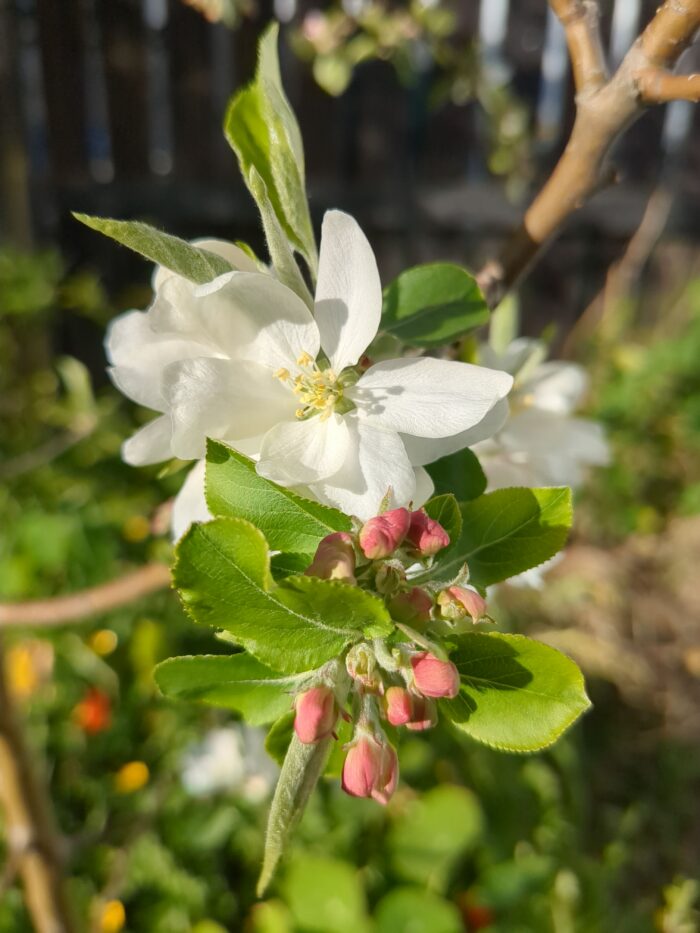
Now that the kōwhai has done its dash, the nearby crabapple has taken on the mantle of Plant Disappearing Under Its Own Flowers. I could claim that this was a cleverly planned succession arrangement, but for one thing, it wouldn’t be honest; and for another, who can really organize a succession of blooming in these days of climatic uncertainty? This same crabapple also bloomed while ripening its fruit last autumn. The one surviving apple from the autumn bloom is now looking rather shrivelled and sad, after having the tree to itself all winter.
Interesting Times
You may have met some overachieving families in your time, but it’s hard to beat the family of King Christian IX of Denmark. Taking his six children in order:
Prince Frederick, subsequently Frederick VIII of Denmark: succeeded his father, and was himself father to a King of Denmark and a King of Norway.
Princess Alexandra, subsequently Queen of the United Kingdom etc, and Empress of India: mother to a King/Emperor and also to a Queen of Norway.
Prince William, subsequently George I of Greece: invited to become King of the Hellenes (they couldn’t get their first pick: Prince Alfred, Duke of Edinburgh), and in due course became the great-grandfather of Prince Philip, Duke of Edinburgh – thus the great-great-grandfather of the present King of the United Kingdom etc.
Princess Dagmar, subsequently Maria Feodorovna, Empress of Russia: wife to one Emperor and mother of another.
Princess Thyra, subsequently Crown Princess of Hanover and Duchess of Cumberland & Teviotdale: turned down William III of the Netherlands and married the eldest son of the last of the reigning kings of Hanover, who were descended from British kings but inherited Hanover under Salic law when Victoria became Queen of the United Kingdom etc.
Prince Valdemar, subsequently Admiral Valdemar and President of the Seamen’s Association of 1856: looks like a bit of an underachiever next to his siblings – until you find out that he turned down the throne of Bulgaria. Possibly he felt that one family can only have so many thrones before it starts to get embarrassing (and a nightmare when figuring out the order of precedence for family reunion dinners).
Nature’s Freaks, Fancies, and Fascinations
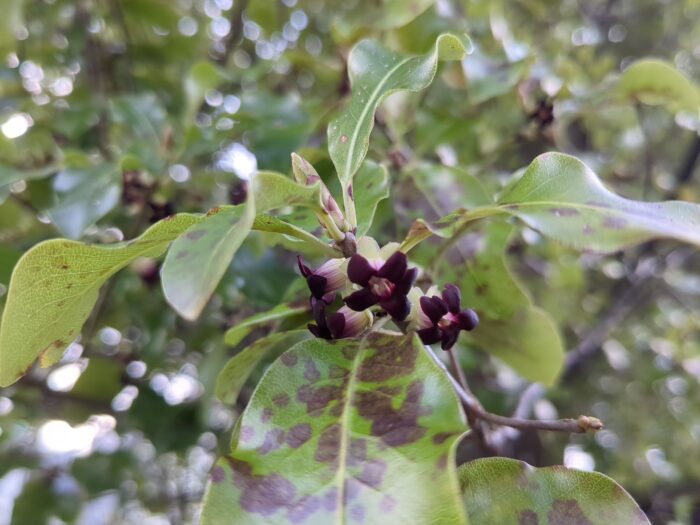
Pittosporum tenuifolium is a usefully unchanging plant for hedging and so forth, but, let me be frank, it’s pretty boring. Except at this time of the year, when its extremely unobtrusive flowers fill the night air with a delightful perfume. We’ve never cut any to bring inside, feeling that a plant which is capable of scenting an entire room from outside a slightly-open window would probably be a bit overwhelming at close quarters.
And Now For Someone Completely Different
“And then, how grievous a thing it is to have the pleasure of your novel destroyed by the ill-considered triumph of a previous reader. ‘Oh, you needn’t be alarmed for Augusta, of course she accepts Gustavus in the end.’ ‘How very ill-natured you are, Susan,’ says Kitty, with tears in her eyes; ‘I don’t care a bit about it now.’ Dear Kitty, if you will read my book, you may defy the ill-nature of your sister. There shall be no secret that she can tell you. Nay, take the last chapter if you please – learn from its pages all the results of our troubled story, and the story shall have lost none of its interest, if indeed there be any interest in it to lose.”
Anthony Trollope, Barchester Towers
Latest Library Loot
Speaking of Trollope and the Barchester Chronicles, I have been reading a chapter aloud each evening before bed; it’s very soothing. (Except on those rare occasions when it isn’t.) We’ve just finished The Small House at Allington, which does a very readable job of showing how a person can manipulate themselves into destroying their own happiness – and how a person can decide to be happy despite a great grief.
Gardening With Conifers is unusual in that it not only tells you how big the plants will get after more than the standard five years, it actually shows you photos of how they look after three decades or so, thanks to author Adrian Bloom’s long experience (and good records).
The Complete Guide to Crochet Dolls and Animals (by The Japan Amigurumi Association) is the book for you if you love extremely detailed step-by-step photographic guides to techniques. It has very few patterns (alas; the lion on page 6 is lethally cute) but is a great reference work.
By My Own Hand Or None
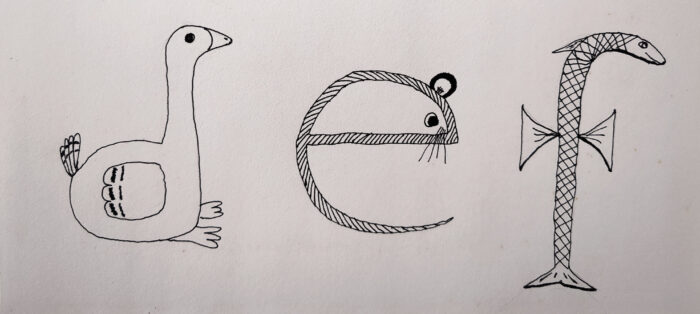
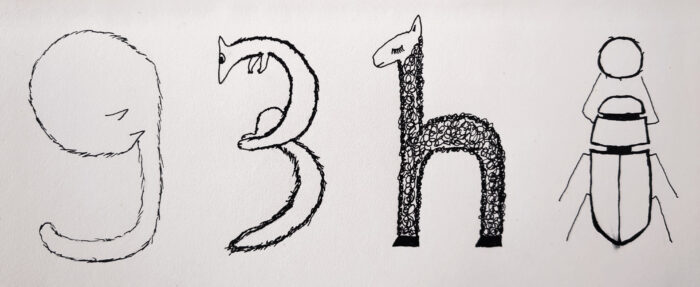
I forgot to mention last week that since the only thing better than a pun is a bilingual pun, I decided to refer to my Inktober efforts as my alphabête. However, those of you who are of an analytical frame of mind will doubtless be wondering how I am going to fill 31 days of Inktober with an alphabet which contains only 26 letters. The answer is to use letters which English has foolishly allowed to lapse, such as yogh (which I have mentioned before in a post about the Dalziels).
For Your Consideration
If your name was pronounced dal-yell, how would you be tempted to spell it?