Do you wear slippers? What kind?
 Carpet slippers? Knitted slippers? Furry slippers? Novelty slippers? Glass, like Cinderella?
And if it can be told, how long have you had them – and how are they holding up?

Old-Fashioned Fruitcake
Do you wear slippers? What kind?
Carpet slippers? Knitted slippers? Furry slippers? Novelty slippers? Glass, like Cinderella?
And if it can be told, how long have you had them – and how are they holding up?
There are times when I am tempted to believe that there are only two kinds of people in this world: those who say they’re humble when they’re not, and those who misunderstand humility altogether and proudly disavow it.
I blame Uriah Heep.
 Humility is not insincerity. Nor is it the state of being humiliated. Nor is it badmouthing oneself in order to elicit compliments from others. Humility, as Charles Spurgeon said, is “to make a right estimate of one’s self.” Neither puffed up too high nor grovelling too low, but seeing oneself clearly, as one truly is.
“Humility has nothing to do with depreciating ourselves and our gifts in ways we know to be untrue,” David F Wells wrote in Losing Our Virtue. “Even “humble” attitudes can be masks of pride. Humility is that freedom from our self which enables us to be in positions in which we have neither recognition nor importance, neither power nor visibility, and even experience deprivation, and yet have joy and delight. It is the freedom of knowing that we are not in the center of the universe, not even in the center of our own private universe.”
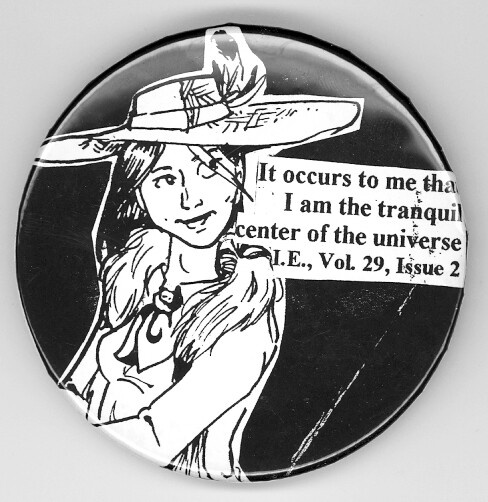 Oh, the relief! Not being the one fixed point around which the universe endlessly turns really takes a lot of pressure off. As the actor Rupert Graves says, “Not being anxious requires a level of humility, doesn’t it? It does, I think. It’s not all about you.” Humility: cheaper than Valium, and with fewer unpleasant side-effects.
But how do we obtain humility? How do we become humble? Sigmund Freud, somewhat unexpectedly, suggests love may be the answer. “Whoever loves becomes humble. Those who love have, so to speak, pawned a part of their narcissism.” If you want to be truly humble, mind you, you might want to think about hocking the whole lot.
According to Phillips Brooks, “The true way to be humble is not to stoop until you are smaller than yourself, but to stand at your real height against some higher nature that will show you what the real smallness of your greatness is.” It’s a matter of getting some perspective and seeing things in proportion.
There are, it seems to me, two parts to humility: seeing oneself clearly, and not focussing on oneself. The first requires a certain level of self-examination, and the second – well, doesn’t. Quite the opposite. As with so many things, a balance must be found.
 We could do worse than take the example of the ‘well-dressed lady’ who checks herself over in the mirror in the morning and then doesn’t give her appearance another thought for the rest of the day.
The quest for humility is, however, frequently inhibited by one’s culture. Some cultures are all for self-aggrandizement; others mandate a sort of false humility, where the Done Thing is to downplay your abilities and achievements.
Some cultures – take New Zealand, for example – sometimes push this to the point of it being frowned upon to do well, let alone talk about it. Conspicuous success invites hostility. Tall Poppy syndrome, it is called, after the story of Tarquin the Great’s unspoken advice to his son on how to conquer the city of Gabii. Let me tell you, Tarquin Jr wouldn’t know what to do with himself in this, the land of hunchbacked poppies.
 As the Maori say, Kāore te kumara e kōrero mō tōna ake reka; the kumara does not say how sweet he is. Be the kumara; don’t be the Heep.
Did you know that the humble of humble pie isn’t the same humble as the humble of humility?
Apparently the pie used to be umble pie – umbles being the heart, kidneys, liver and lungs of a meat animal, usually deer. The word umble itself comes from numble (or nomble) meaning, basically, offal.

So there you have it. Humble pie is just offal. (The management apologizes for the execrable pun.)